
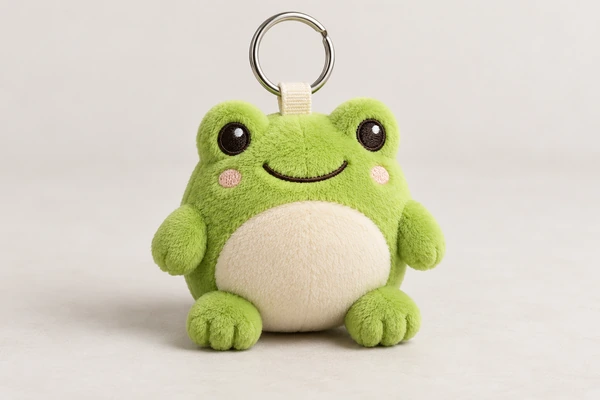
Before bulk plush keychain production, approve the complete path from the metal hardware through the fabric loop to the sewn body. Check seams, loop insertion, closure details and hardware operation against a documented sample. Visual inspection can reveal construction problems, but it does not replace any applicable laboratory assessment or agreed mechanical testing.
A lime frog from a plush keychain range illustrates the checklist. Its charm depends on a small body, simple face and reliable attachment. The ring alone is only one part of that assembly.
Check 1: identify the exact construction
Record hardware type, dimensions, finish, loop material, loop width and attachment location. Include the body fabric, thread and seam construction where relevant. Ask for clear front, back and side photographs plus an actual sample. Avoid approving a product from a single attractive front image.
Add the attachment drawing to the OEM and ODM specification. If a rotating hook is considered, a component page such as YKK’s rotating-hook reference illustrates the value of identifying an exact component. A supplier’s product page is not evidence that the finished frog assembly meets your requirements.
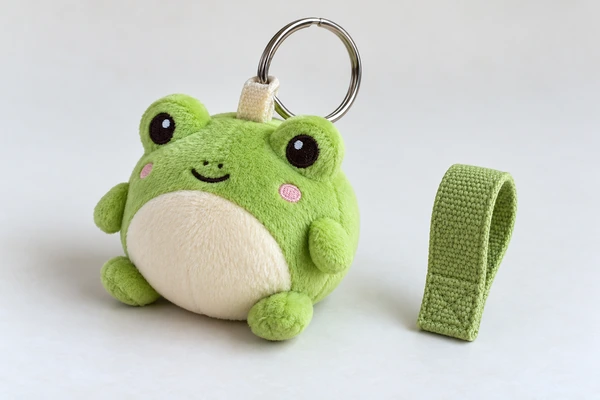
Check 2: inspect where the loop enters the body
Confirm the approved insertion location and the construction that secures it. Look for uneven stitching, missed material, visible gaps and fabric distortion. Ask how the loop is held during sewing and which internal details are documented. The portion hidden inside the body can matter even though shoppers never see it.
Discuss this through the manufacturing review. The Coats soft and secure seams guide provides sewing context. Agree on the actual method and acceptance criteria with the supplier instead of specifying “reinforced” without explaining what must be present.
Check 3: review the body and closure seam
Turn the sample through several viewing angles. Check the seam around narrow areas, the stuffing closure and points where different fabrics meet. Look for trapped pile, inconsistent shape, visible filling and skipped stitches. Compare the frog’s front and back symmetry with the approved reference rather than with an idealized drawing alone.
Define which appearance differences require correction and document examples. A defect sheet with photographs is easier to apply than a general instruction to make every item perfect. Include these observations in the quality-control checklist, with clear ownership of any corrective action.
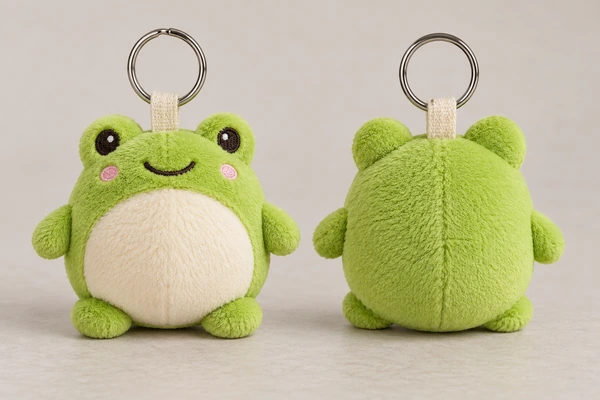
Check 4: evaluate hardware operation and the whole assembly
Check that the selected ring or clip operates as intended and does not visibly damage the fabric loop during ordinary handling. Record sharp edges, misalignment, finish defects or incomplete closure. If loads, cycles or other performance checks are required, agree on a method, sample plan and criteria appropriate to the product.
Do not invent a universal pull-force threshold or perform improvised destructive tests as a substitute for the relevant standard. For US toys, consult CPSC toy safety guidance and its small-parts guidance. Intended use and age classification should be established for the actual product.
Where third-party testing is required, use an appropriately scoped laboratory; the CPSC accepted-laboratory directory is a relevant US resource. Review the Children’s Product Certificate guidance to understand the documentation context. Keep the tested configuration linked to the order specification.
Check 5: compare several representative units
Review whether loop position, body shape and hardware orientation remain consistent across the agreed sample group. Record individual observations, not only a group photograph. Ask how the factory will monitor the assembly during production and what happens when a material or component changes.
The process approach in ISO 9001 provides quality-management context; it does not certify a particular keychain’s strength. Use ISO 10007 configuration-management guidance to organize approved versions and changes. A new ring supplier or loop material should not be treated as an invisible substitution.
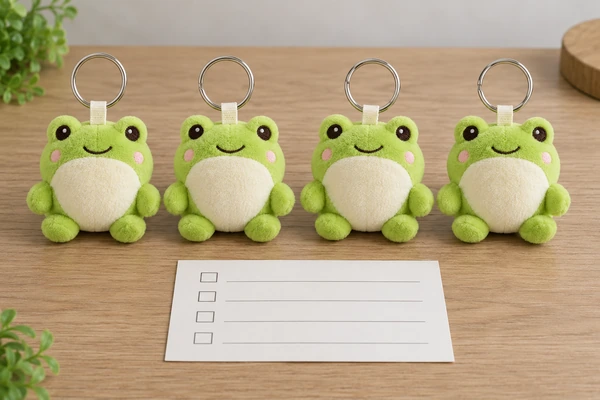
Use a simple observation log with a sample identifier, location of the issue, photograph and decision. For example, distinguish a twisted loop from a loop sewn into the wrong body position; the corrective action may differ. Keep appearance checks separate from measured performance results so the evidence is easy to interpret. If a sample is opened for construction review, identify it as a review unit and retain a separate intact reference. Confirm who can authorize a correction and how the revised sample is distinguished from the earlier version before the production team receives either one.
Record the production release
Retain an approved physical sample, component references, photographs and outstanding-action list. Identify which checks are completed and which evidence remains pending. Release the order against a defined specification, then use the same references for in-process and final inspection.
Review the buyer FAQ and company introduction, then send your keychain inspection brief with target size, audience and hardware preference.
Images are construction concepts, not proof of attachment strength or safety compliance.
Your plush accessory specifications record
| Confirm | Record with your specification |
|---|---|
| Size and attachment | Finished plush size, drop length and connector type |
| Retail variants | Colors, quantities and clear variant identifiers |
| Assembly check | Complete attachment, hanging orientation and packing sample |
Prepare your plush accessory specifications inquiry
Copy and complete this brief; mark unresolved items to confirm.
Company / contact:
Product / size / intended use:
Market / quantity / arrival date:
Size and attachment:
Retail variants:
Assembly check:
Email This BriefWhatsApp This Brief
Review and send it yourself, or paste it into our inquiry form.
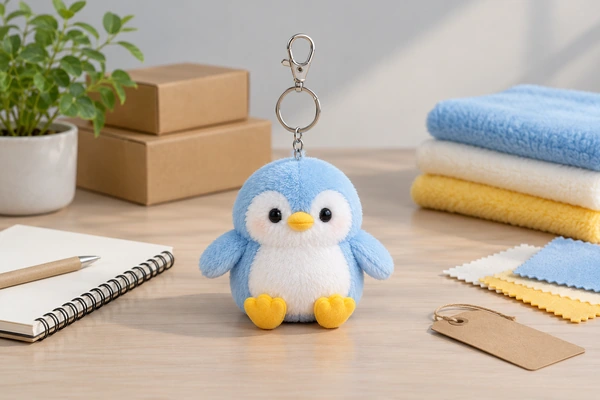
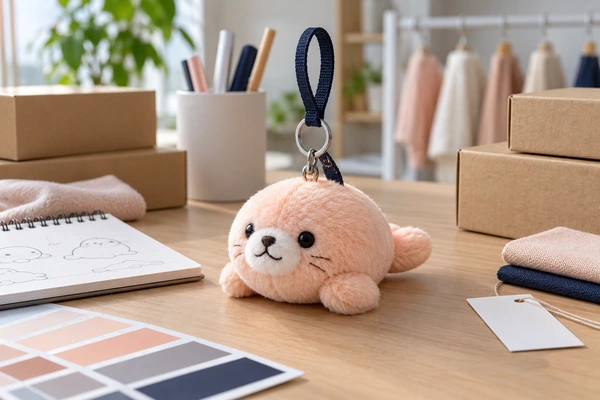
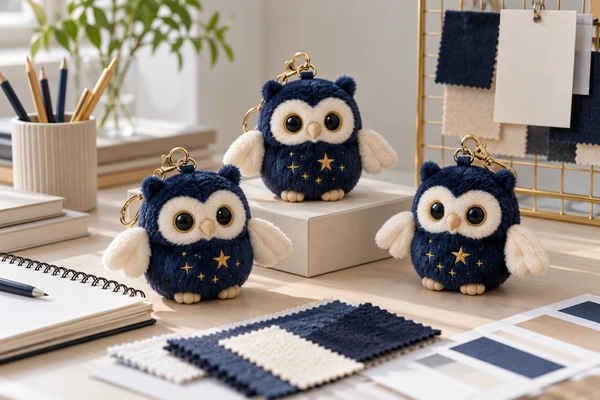
[…] assortment accuracy to the seam and attachment checks. Review every variant’s actual materials and construction; palette approval does not establish […]