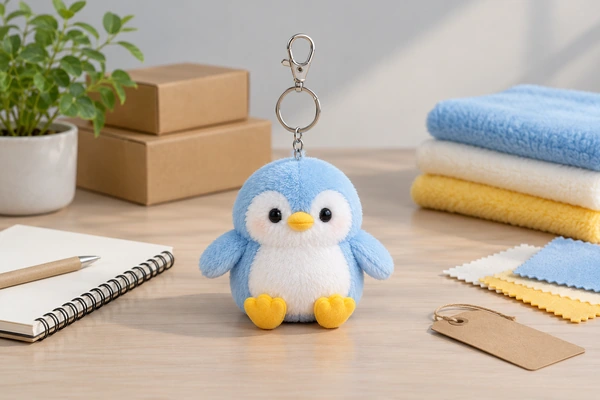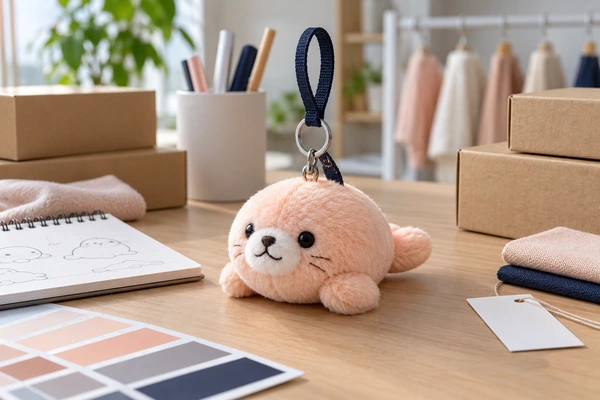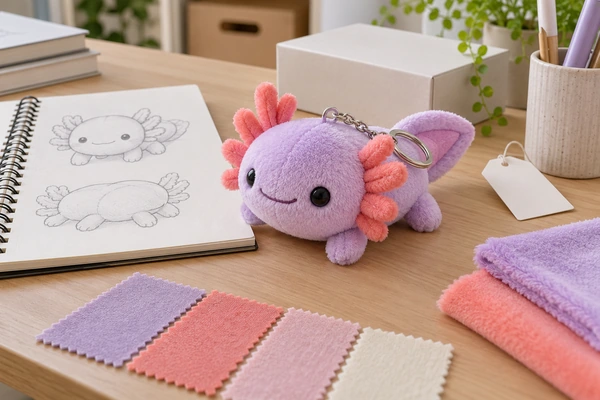
A consistent plush bag charm range needs a few shared rules and deliberate room for variation. Define the common size envelope, construction approach, hardware, branding and presentation before developing individual characters. Then decide which colors or features may vary. This gives retail buyers a recognizable collection without making every item identical.
For an accessories merchandiser, the range should work as a display, an order sheet and a replenishment program. Begin with the intended bag charm format, the customer and the available display space. A collection that looks coherent in artwork can still be difficult to sort or sell if its physical rules are unclear.
Rule 1: define the shared silhouette limits
Set an agreed range for finished body height, width, depth and overall hanging length. State whether ears, wings and fittings are included in each measurement. Use the NIST conversion reference if the buying team works across units, and keep one primary unit in the specification.
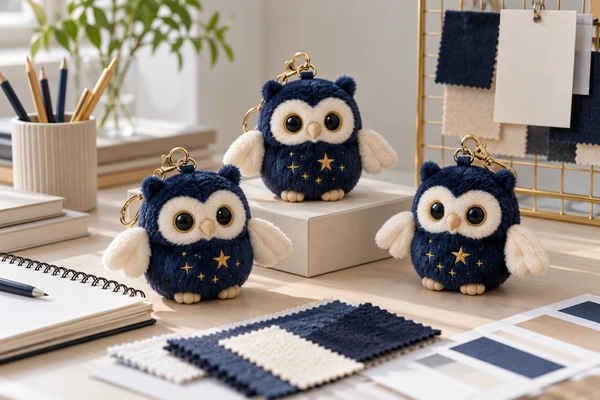
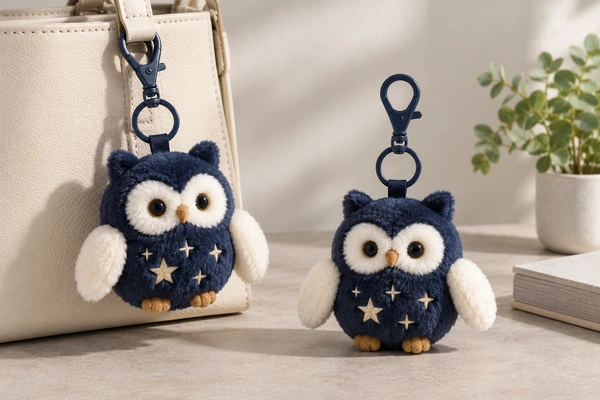
A midnight-blue star owl with cream wings might anchor the range. Other colorways can change the mood while retaining the same body pattern and face treatment. If a new character has a much longer tail, review how it hangs beside the owl rather than assuming equal body height creates an equal display footprint.

Rule 2: separate core colors from experiments
Choose a limited core palette and identify any seasonal or retailer-specific additions. Define the quantity split by variant, not just a total order. Our assortment planning guide helps connect color choices with the buying plan.
Use complete physical color references and review the proposed fabrics together. Pantone’s color-system overview helps specify the reference type. Agree how neighboring colors should relate, especially if fabrics or trims have different textures. The goal is an intentional collection, not an undocumented approximation of a screen palette.
Rule 3: standardize the attachment interface
Where practical, choose a shared ring or clip, loop material and attachment location. Review the hardware options against the intended bags and handles. A consistent finish helps appearance, while a consistent interface helps users understand how each item attaches.
Keep exceptions visible. A heavier or wider character may need a separate construction review. Include intended users and markets in that assessment, using CPSC toy guidance and applicable small-parts guidance as US starting points. Product naming alone does not decide its classification.
Rule 4: give branding a consistent location
Decide whether the brand appears on embroidery, a woven label, a hangtag or a combination. Our branding comparison helps allocate each message to an appropriate surface. Keep required information readable without forcing long text onto a tiny plush body.
Review the face at finished size and record which details may be simplified. The small-scale design guide is useful when extending the collection. Maintain a controlled artwork and sample set using configuration-management principles, so each approved exception is intentional.
Rule 5: make variants easy to order and receive
| Range field | Information to fix |
|---|---|
| SKU | Unique internal reference for the sellable variant |
| Colorway | Clear name and approved material reference |
| Pack | Single-color or mixed assortment with exact quantities |
| Identification | Approved barcode and label responsibility |
| Reorder | Current specification and availability confirmation |
Use GS1’s barcode preparation steps when developing retail identification. Do not let similar character names replace reliable item records. Check that carton contents and order lines use the same variant names.

Rule 6: approve the collection as a display
Write a short exception rule for future additions. For example, the star owl range might share a cream wing fabric, silver clip and one hangtag layout, while body color and a small embroidered motif may vary. A new style that needs a different clip or larger pack should receive its own review instead of being added automatically under the original approval.
For a hypothetical mixed case, record the exact quantity of each colorway and the total case quantity on the packing brief. Ask receiving staff whether they can identify the contents without unpacking every unit. If they cannot, revise the carton information or packing arrangement before bulk production. This matters especially when stores reorder only selected colors.
Retain one approved collection set and keep a dated photograph of its intended display. Review replacements beside that set. A single sample may look acceptable on its own while differing noticeably from the rest of the range.
Arrange physical samples in the proposed fixture and assess spacing, visibility and handling. Use the retail packaging guide to consider peg and countertop formats. Review transport protection against relevant ISTA procedure information before finalizing mixed packs.
After launch, compare sales and stock by variant using measures described in Shopify’s inventory guidance. Separate an unavailable color from an unpopular one when interpreting results. Bring your range rules and proposed SKU matrix to Shinegifts for a development discussion.
Prepare your plush accessory specifications inquiry
Copy and complete this brief; mark unresolved items to confirm.
Company / contact:
Product / size / intended use:
Market / quantity / arrival date:
Size and attachment:
Retail variants:
Assembly check:
Email This BriefWhatsApp This Brief
Review and send it yourself, or paste it into our inquiry form.