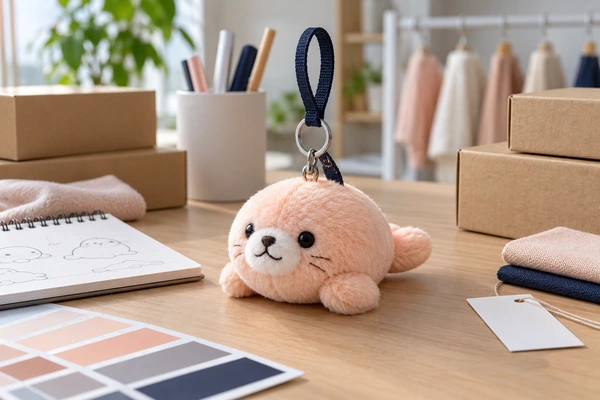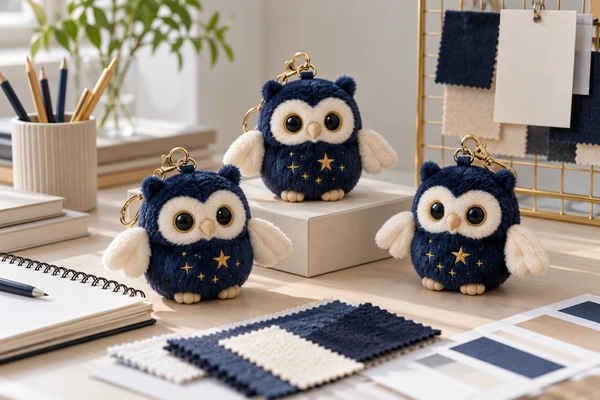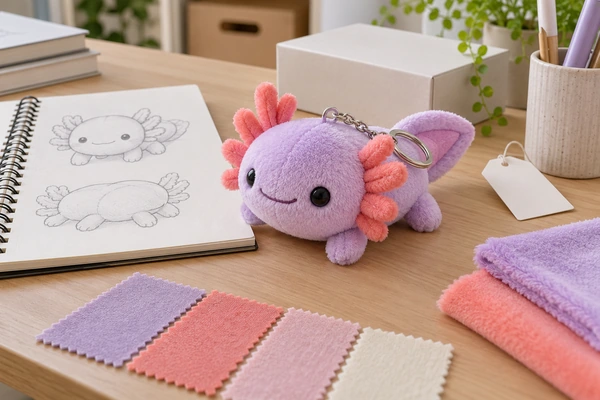
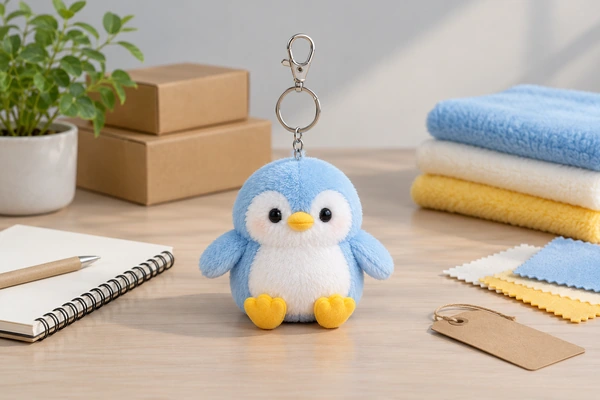
Importers should ask plush keychain suppliers how the product is classified, which hazards have been assessed, what tests apply and how the tested construction will be maintained in production. Safety and durability overlap, but they answer different questions. A charm that looks robust may still need a different material, attachment or label to meet its intended use and market requirements.
Start with the whole product: plush body, eyes, decoration, fabric loop, connecting ring, clasp and packaging. The questions below build on our hardware selection guide. They are a framework for discussions with your supplier and qualified compliance specialists, not a substitute for product-specific assessment.
Who is expected to use this keychain?
Give the supplier the intended age group, marketing presentation, sales channels and destination countries. Ask how these facts affect classification and applicable requirements. Calling an item a “bag charm” does not by itself decide whether it is a toy or a children’s product. For US projects, begin with CPSC toy safety guidance; for EU toy projects, consult the European Commission’s toy safety framework.
Confirm the rules and standard editions relevant to the planned placing-on-market date. A report from another market or an older project may not answer your current requirements. Keep the classification decision alongside the product brief and approved artwork so later marketing changes can be reviewed.

What could detach, open or expose an edge?
Ask the supplier to identify potential failure points across the attachment chain. The fabric loop may hold while a connecting ring opens; a clasp may survive while the seam anchoring the loop tears. Discuss eye attachments, decorative pieces and exposed hardware as well as the main plush body. Use the seam and attachment checklist to document construction details.
Where relevant, review CPSC small-parts guidance. The assessment can include parts released during applicable use-and-abuse testing, and exclusions and age-related rules matter. A warning label does not automatically make an unsuitable construction acceptable. Do not invent a universal pull-force value for every keychain; ask the laboratory to identify the appropriate method and criteria.
Which checks demonstrate everyday durability?
Specify the use conditions that matter to your buyer: repeated clasp operation, rubbing against a handbag, repeated handling and transport in a mixed carton. Ask how the proposed fabric, embroidery and hardware finish will be evaluated. The small-scale design guide helps reduce details that become fragile or unclear when miniaturized.
| Component | Question for the supplier |
|---|---|
| Loop and seam | How is the attachment anchored and checked? |
| Clasp and ring | How are function, closure and finish assessed? |
| Decoration | Can pieces detach or stitching unravel? |
| Fabric and color | What evidence addresses wear and transfer? |
Keep commercial durability criteria distinct from mandatory safety requirements. A buyer may request an additional wear evaluation because its product will be used daily. Record the method, sample condition and acceptance threshold rather than accepting the phrase “durability tested” without context.
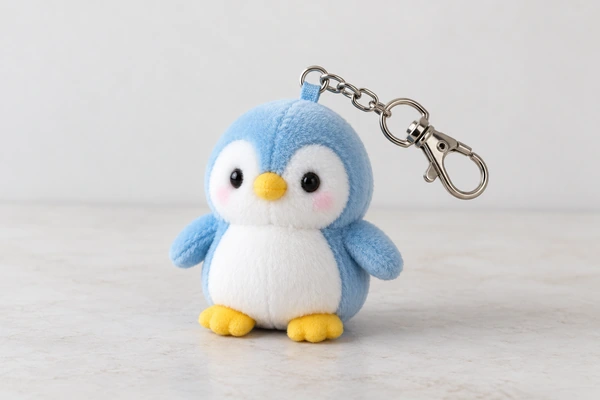
Does the evidence cover this exact construction?
Request complete relevant reports and compare the sample description, photographs, materials, colors and hardware with the proposed order. For applicable US children’s product testing, check the laboratory and relevant acceptance scope using the CPSC laboratory search. Review certificate responsibilities with the CPC guidance, including current import filing requirements where applicable.
For other markets, prepare questions using Health Canada’s toy guide or Great Britain’s toy regulations guidance. Ask a qualified reviewer to resolve gaps rather than treating several unrelated certificates as interchangeable.
How will a failed check be handled?
Ask for a written response process before production begins. It should identify who isolates affected material or finished goods, who investigates the cause and who decides whether corrected units can be released. A replacement sample is useful only if the supplier can explain what changed and how the same correction will reach the bulk order.
For example, if a loop pulls out at its seam, the response might involve reviewing seam allowance, reinforcement and stitch execution. That is an investigation example, not a prescribed remedy or a passing test result. Have the appropriate specialist evaluate the revised construction, and preserve the original and revised records. Agree how the importer will be informed about repeated failures, mixed batches or a proposed material substitution so unresolved issues cannot disappear inside a general shipment approval.
What changes trigger another review?
Require notification before changes to fabric, filling, eyes, thread, loops, metal finish or subcontracted components. Retain the approved sample and specification using the sample sign-off checklist. Link production and material batches to the product records; CPSC tracking-label guidance explains relevant US children’s product traceability expectations.
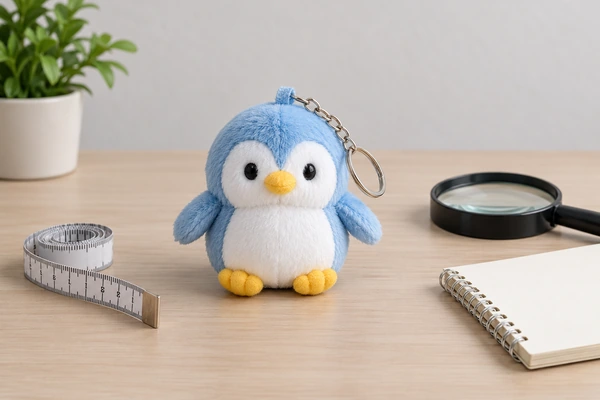
Finally, review how branding labels and hangtags and the retail packaging affect the finished item. Consolidate unanswered questions, supporting evidence and responsible reviewers before sending your plush keychain inquiry.
Prepare your plush accessory specifications inquiry
Copy and complete this brief; mark unresolved items to confirm.
Company / contact:
Product / size / intended use:
Market / quantity / arrival date:
Size and attachment:
Retail variants:
Assembly check:
Email This BriefWhatsApp This Brief
Review and send it yourself, or paste it into our inquiry form.