
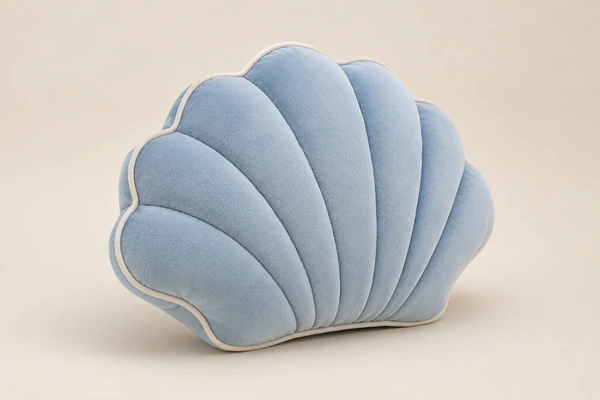
A useful bulk plush cushion checklist describes what to inspect, how to compare it and what happens when a result falls outside the agreed requirement. Start with an approved cushion, documented dimensions and construction details. Check seams, filling distribution and shape together: a cushion can look attractive from the front while hiding an uneven closure or inconsistent side profile.
Use a powder-blue scalloped cushion from a plush cushion range as an example. The checklist below is a purchasing framework, not a universal test standard. Set product-specific tolerances and assessment methods before production, particularly where decorative shapes make measurements less straightforward.
Before inspection: establish the reference
Identify the sample revision, fabric references, filling specification, finished dimensions and packaging configuration. State whether dimensions describe the empty cover or the filled article. Explain how the cushion rests during measurement and which points define its width, height and thickness. Include these instructions in the custom cushion specification.
Use consistent units; NIST conversion guidance is useful when a buyer requires both metric and US customary values. Avoid rounding one version independently until the two specifications disagree. Keep photographs of the measurement setup with the reference sample.
Checkpoint 1: seams and closure
- Follow the full perimeter, including inward curves and narrow scallops.
- Look for skipped stitches, visible gaps, loose thread and exposed filling.
- Compare piping alignment and seam appearance with the approved sample.
- Inspect the final stuffing closure from several viewing angles.
Discuss recurring issues with the manufacturing team. The Coats soft and secure seams guide provides construction context. Your checklist should describe the finished result and any agreed construction requirement rather than relying on an undefined instruction such as “strong stitching.”

Checkpoint 2: filling and feel
Confirm the specified filling material and any agreed mass range. Compare how filling reaches corners, narrow lobes and the center. Record lumps, empty areas or a noticeably different firmness. If feel is important, retain a physical reference and describe the handling method; photographs alone cannot communicate softness or resilience reliably.
Keep mass and appearance as separate observations. Equal filling mass does not automatically produce equal shape when distribution or construction changes. If material certification is requested, review the OEKO-TEX STANDARD 100 scope and verify the supplied evidence covers the relevant material or article. Do not infer certification from a generic supplier logo.

Checkpoint 3: shape and dimensions
Place cushions in the agreed position without stretching them into compliance. Measure the defined points, then compare front, side and back profiles. For a scalloped outline, check whether corresponding lobes remain balanced and whether piping distorts the edge. Record dimensions and visible shape issues separately so corrective action addresses the actual cause.
Include packaged dimensions in the receiving data where needed, following the relevant GS1 measurement guidance. A product can meet its open dimensions yet arrive in packaging that does not suit the planned shelf or storage location.
Checkpoint 4: care and packing effects
Agree on supported care instructions for the finished combination of cover, decoration and filling. ISO 3758 addresses care-labeling symbols, while ISO 6330 provides textile washing and drying procedures. Choose an appropriate assessment with qualified support rather than assigning a care claim from fabric information alone.
If cushions are compressed, specify the packing and recovery conditions used for approval. Compare the recovered sample with its recorded baseline. For transport protection, review relevant ISTA procedures. These questions belong in the quality plan before a bulk shipment makes an unexpected crease or shape change difficult to resolve.
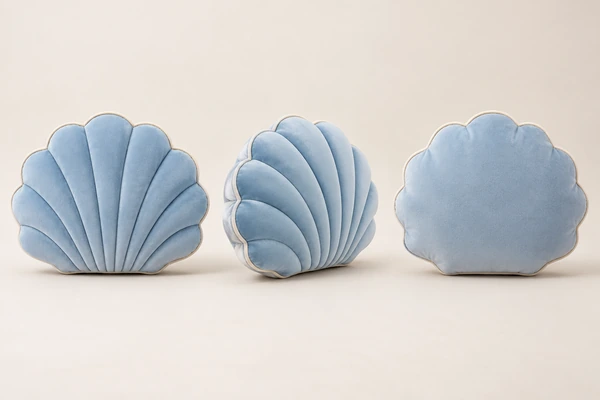
When evaluating several units, use the same surface, orientation and handling sequence. Do not repeatedly fluff one sample while leaving another untouched. If packing affects the outline, record the time between unpacking and inspection. Keep a separate note for temporary creases and persistent distortion rather than combining both as a general appearance failure. Before approving a correction, compare the revised cushion with the original reference and confirm that solving one issue has not changed another feature, such as thickness or edge firmness. These simple controls make inspection records more useful when the buyer and factory are reviewing different physical units.
Close each inspection with a clear decision
Agree on the sample selection, defect definitions and disposition process in the quality-control plan. Record the order, unit identifier, observation, photograph and outcome. Distinguish rework, replacement, further investigation and acceptance; a photograph labeled “issue” leaves the next step unclear.
Use ISO 10007 configuration-management principles to keep revised specifications connected to approved samples. Check the buyer FAQ and company overview, then send your cushion inspection brief with the intended use and priority dimensions.
Images show original cushion concepts and do not demonstrate tested performance or certification.
Your filling specifications record
| Confirm | Record with your specification |
|---|---|
| Fill reference | Material, weight basis and distribution by product section |
| Construction | Containment, seams and intended finished shape |
| Recovery check | Use or packing conditions and agreed recovery observations |
Prepare your filling specifications inquiry
Copy and complete this brief; mark unresolved items to confirm.
Company / contact:
Product / size / intended use:
Market / quantity / arrival date:
Fill reference:
Construction:
Recovery check:
Email This BriefWhatsApp This Brief
Review and send it yourself, or paste it into our inquiry form.


