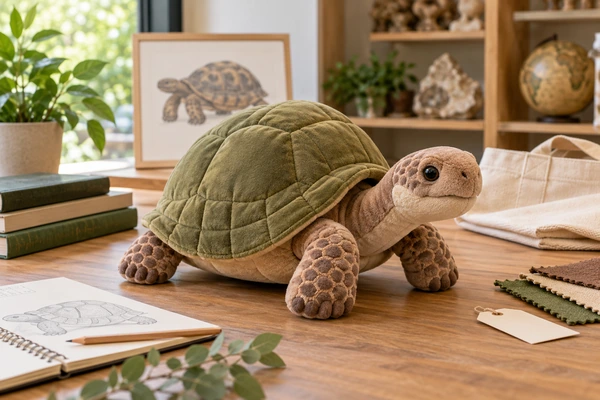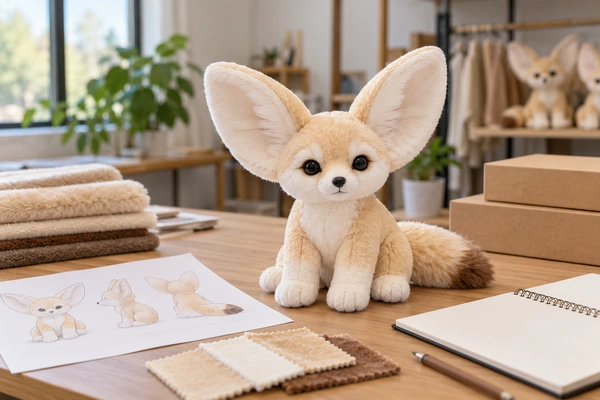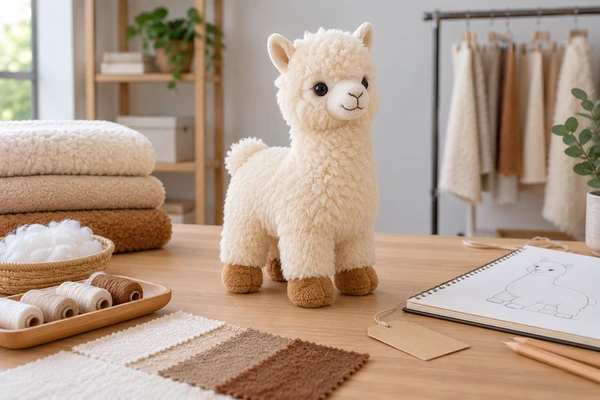

Source zoo and aquarium plush around the visitor’s experience: the animal they noticed, the story they remember and the souvenir they can comfortably carry home. A strong range connects species recognition, gift price points and practical display requirements. It also gives educational staff a clear opportunity to review animal names and supporting information.
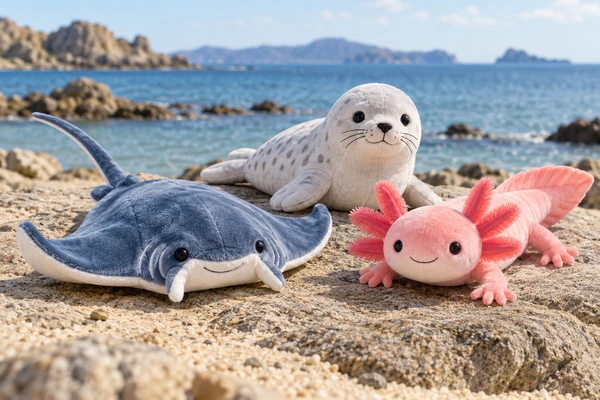
Start with a shortlist for your animal plush range. A ray, seal and axolotl might serve different exhibit stories; they should not be selected simply because all three look appealing in a supplier catalog. The following visitor journey offers a useful buying framework.
At the exhibit: build a recognizable connection
Ask which species visitors actually encounter and which features they mention. Give the design team approved reference material and a list of identifying details. A ray’s silhouette, a seal’s body shape or an axolotl’s external gills may matter more than an elaborate accessory. Avoid attaching one species name to a generic animal model without review.
Use reliable educational references such as the Monterey Bay Aquarium animal directory and the Smithsonian red panda profile as examples of species-specific information. These institutions do not endorse your merchandise merely because their resources inform research. Obtain any necessary permission before using institutional branding or protected assets.
Keep natural-history facts separate from character storytelling. A playful expression can support the design, while the tag still uses an accurate animal name. Submit the intended interpretation through an OEM and ODM brief with must-keep features clearly marked.
At the shop entrance: make the range understandable
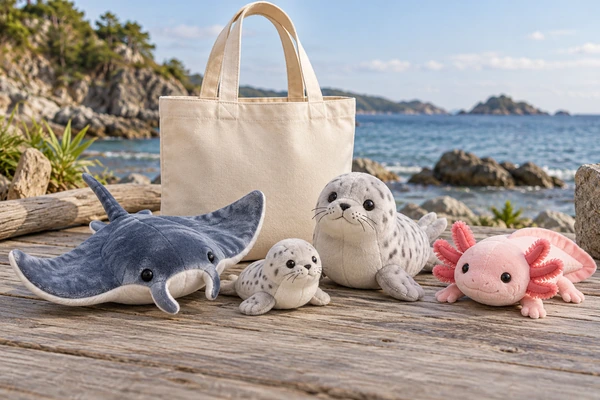
Organize products around a visitor-friendly idea: an exhibit zone, habitat or coordinated souvenir collection. Give each size a purpose. A compact animal may suit a small souvenir purchase, while a larger design can serve as the main gift. Check whether the smallest version still communicates the species without relying on its tag.
Use assortment planning guidance to distinguish breadth from duplication. Several colors of the same generic animal do not necessarily provide the same value as a carefully selected group representing different exhibits. Use store-specific sales and visitor feedback to decide how much variety is justified.
Review silhouettes and materials through the manufacturing discussion. Wide fins and long tails can increase shelf space and packing volume. Those features may be essential to recognition, but their operational effect should be visible in the buying decision.
At the checkout: check the information shoppers receive
Keep the product name, intended audience, required labeling and optional educational story distinct. For US toys, the CPSC toy safety guidance provides a starting point for planning the applicable assessment. Do not let an educational purpose substitute for product-safety evidence.
If materials are described as certified, identify the certified item and documentation. The OEKO-TEX STANDARD 100 overview helps explain that certification has a defined scope. A logo on an unrelated fabric sample is not enough to support a claim about the entire souvenir.
Review environmental and conservation language with particular care. The FTC Green Guides summary is useful when evaluating material or packaging claims. If sales support a conservation program, state only the contribution arrangement that the organization has actually authorized and can substantiate.
On the journey home: review size and packaging
Place the sample in the bag visitors typically receive. Check whether tags bend, fins fold awkwardly or packaging adds unnecessary bulk. Ask staff to simulate a normal checkout and packing sequence. A product may photograph beautifully yet be inconvenient for visitors carrying several items or traveling with limited luggage.
Document product and package dimensions using consistent definitions, with the GS1 measurement standard as a reference. Include packed appearance and assortment identification in the quality-control plan, alongside species markings, seams and attachment details.
Before the next order: protect continuity
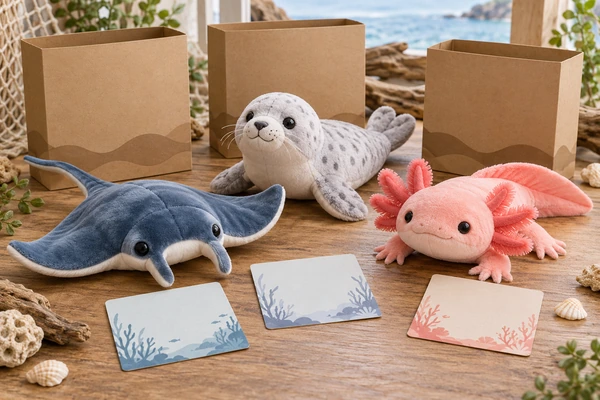
Make the educational review manageable: send one sheet per species with the proposed name, identifying features, tag copy and reference sources. Ask reviewers to separate factual corrections from personal style preferences. That distinction helps the buying team preserve a coherent collection while correcting real inaccuracies.
For a new exhibit, decide whether its souvenir is a temporary launch item or part of the continuing range. A permanent design needs a replenishment plan and stable references. A limited campaign may instead prioritize a clearly defined quantity and a specific selling period.
Retain approved samples and artwork versions. If a mascot, partner logo or licensed character is included, review usage rights; WIPO’s character merchandising discussion provides background for that conversation. Confirm the territory, product use and approval process with the rights holder.
Collect staff feedback by design, including common questions and packing problems. Review the sourcing FAQ and company introduction, then share your exhibit-led sourcing brief with species, target sizes and required delivery dates.
Images show original souvenir concepts. They do not indicate affiliation with any zoo, aquarium or conservation organization.
Your educational retail planning record
| Confirm | Record with your specification |
|---|---|
| Audience and theme | Age group, learning context and species or story references |
| Product selection | Recognizable details, size and intended interaction |
| Program delivery | Quantities, explanatory materials and distribution date |
Prepare your educational retail planning inquiry
Copy and complete this brief; mark unresolved items to confirm.
Company / contact:
Product / size / intended use:
Market / quantity / arrival date:
Audience and theme:
Product selection:
Program delivery:
Email This BriefWhatsApp This Brief
Review and send it yourself, or paste it into our inquiry form.