To assess an animal plush factory’s workflow, follow one design from the initial brief to the packed production order. Ask what information enters each stage, who makes the decision and which record proves the stage is complete. A polished sample is useful, but the process behind it determines whether the factory can reproduce that result.
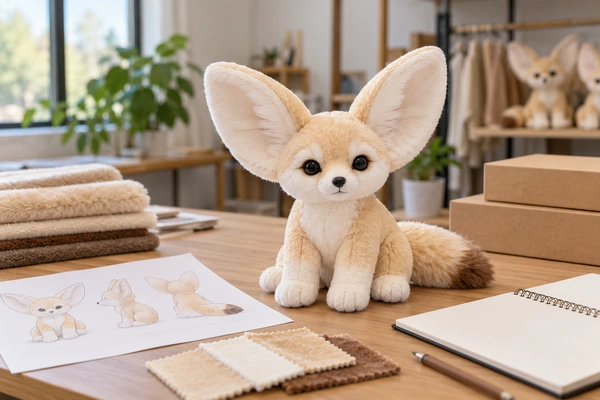
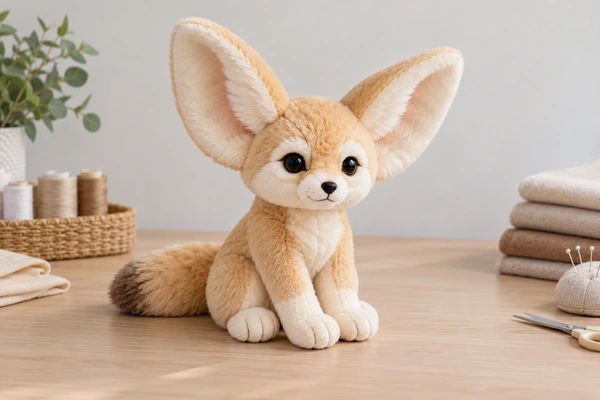
This interview structure suits buyers building a repeatable wholesale stuffed animal range. Use one representative animal from your actual collection. A large-eared fox, for example, exposes questions about pattern shape, ear support, symmetry, pile direction and packing that a generic company presentation may miss.
Gate one: does the factory understand the brief?
Ask the supplier to restate the product’s intended use, customer, market, dimensions and essential visual features. Request a list of assumptions before discussing a firm production schedule. If the buyer has supplied only a front drawing, the factory should identify the missing side and back information rather than quietly inventing it. Our design brief guide provides the input checklist.
Listen for a named person who owns technical questions and consolidates answers. A documented management system can support this coordination; ISO’s quality management overview explains the general framework. If certification is offered as evidence, check the issuer, scope and covered location using ISO’s certification guidance. A certificate does not approve your particular plush design.

Gate two: how is the first sample developed?
Ask who makes the pattern, selects material and prepares face embroidery. Find out which operations are completed at the stated facility and which involve subcontractors. Review a real sample sequence where permission allows: initial interpretation, identified problems, corrected version and approval record. The changes should connect to comments, not appear as unexplained replacements.
Use the artwork-to-plush sampling comparison to discuss unavoidable three-dimensional adjustments. For color, ask how physical references are selected; Pantone’s color systems explanation helps clarify terminology. Require the intended production fabric or a clearly disclosed substitute at every review.
Gate three: what exactly does approval release?
A useful approval identifies the sample version, specifications, accepted deviations and outstanding conditions. Ask whether the supplier keeps a sealed reference and how operators receive the current instruction. Follow the sample approval checklist so approving appearance does not accidentally approve packaging or unreviewed materials.
Discuss change control using the principles behind ISO’s configuration management guidance: identify the agreed configuration, record changes and retain the decision trail. Ask who can authorize a material replacement after sign-off. A salesperson’s reassuring message is insufficient if the production team still has an older drawing.
Gate four: how does production stay connected?
| Ask to see | What it should connect |
|---|---|
| Material issue record | Incoming fabric or trim lot to the order |
| Work instruction | Current drawing, measurements and sample version |
| In-process check | Observed defect, responsible person and correction |
| Final inspection | Order identity, acceptance criteria and disposition |
Ask the factory to demonstrate a traceability exercise on a permitted example. Can it connect a finished carton to relevant material and production records? GS1 traceability resources explain the underlying identification approach. Include fabric selection requirements in that trail instead of recording only a general color description.
Separate routine quality checks from required safety evaluation. For toy projects, establish applicable testing with reference to CPSC toy safety guidance and, where relevant, its accepted laboratory search. Verify the laboratory’s relevant scope and the report’s connection to your product rather than accepting an unrelated report cover.

Test the handoff with one specific question
Choose a feature that changed during sampling and ask several relevant contacts which version will be produced. For the fox example, this could be the ear shape or the position of its nose. The answers should point to the same approved reference. Inconsistent answers reveal a handoff gap that should be resolved before ordering.
Also ask how a new operator learns the acceptance standard and how the first production units are reviewed. The purpose is not to demand confidential customer documents. Redacted examples or a demonstration using your own project can show whether responsibilities, instructions and records actually connect without exposing another buyer’s information.
Gate five: can the factory explain an exception?
Ask what happens when embroidery is misplaced, a material delivery is late or a carton fails the agreed packing check. A credible answer identifies containment, communication, correction and release responsibility. Include distribution requirements using ISTA packaging procedures as a discussion resource. Review how the packed product will recover before judging its final appearance.
Record each gate as demonstrated, partially demonstrated or unresolved, with the evidence needed to close it. Do not assign points for confident answers alone. Compare the workflow’s complexity with your order’s cost and customization drivers, then send the remaining questions with your animal plush project inquiry.
Prepare your production planning inquiry
Copy and complete this brief; mark unresolved items to confirm.
Company / contact:
Product / size / intended use:
Market / quantity / arrival date:
Capacity assumption:
Milestones:
Exception process:
Email This BriefWhatsApp This Brief
Review and send it yourself, or paste it into our inquiry form.