Material traceability in animal plush toy production means being able to connect a finished batch with the materials, components and relevant production records used to make it. A fabric description is a starting point. A usable traceability record also identifies which material arrived, where it was used and which finished goods received it.
For a quality coordinator, the practical test is whether a specific product concern can be followed backward to its inputs and forward to affected shipments. Build that requirement into the manufacturing brief before production begins, rather than asking for a collection of certificates after dispatch.
Follow one product through four handoffs
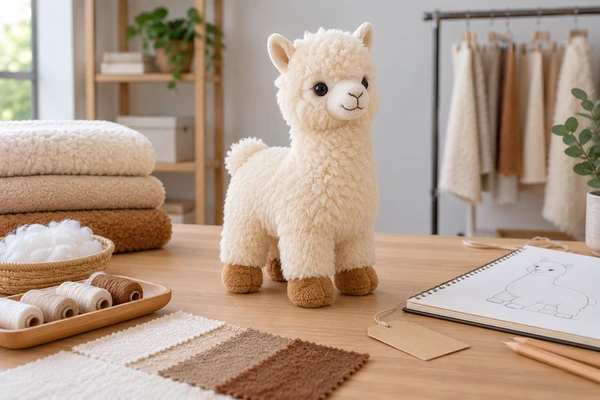
Consider a cream alpaca plush with caramel hooves. Its outer fabric, filling, embroidery thread, labels and any accessories may come from different sources. Start with a bill of materials that identifies each approved input and its supplier reference. Our fabric selection guide helps specify the outer textile without confusing appearance with origin.
| Handoff | Record to connect | Buyer’s question |
|---|---|---|
| Receiving | Purchase reference, material and lot | Can incoming material be identified? |
| Production | Material issue and production batch | Which inputs went into this run? |
| Packing | Finished batch and carton allocation | Can mixed batches be distinguished? |
| Dispatch | Cartons, quantities and destination | Where did each batch go? |
The GS1 Global Traceability Standard describes identification and supply-chain events. Use it as background when agreeing a system proportionate to your order. A familiar SKU distinguishes a product type; it does not by itself distinguish every manufacturing batch.

Ask how substitutions are controlled
Traceability becomes weaker when an unavailable input is replaced without a recorded decision. Define which substitutions require buyer approval and who updates the material list. A similar-looking cream fabric may differ in pile, backing, composition or claimed certification scope. Review the revised sample and any relevant evaluation before releasing the change.
Keep the approval history connected to the batch record. ISO configuration-management guidance provides a useful structure for version identification. Your sample approval record should name the material version that was actually accepted, including any conditional approvals.
Distinguish identification, testing and certification
These documents answer different questions. A lot number identifies a group of inputs or products. A test report describes the submitted sample and evaluated requirements. A certification claim has its own defined scope and rules. Avoid treating one document as a universal substitute for the others.
For US children’s products, consult the CPSC tracking-label FAQ to understand the relevant requirements. Review applicable product testing and documentation separately using the CPSC toy-safety resources. A traceable product is not automatically a compliant product.

If OEKO-TEX certification is claimed, review the scope of STANDARD 100 and verify the supplied reference through the official Label Check. Match the covered material or product with what is being supplied. Do not assume certification of one input covers the entire assembled toy.
Make environmental claims match the evidence
For recycled-content projects, ask which component and percentage the claim concerns, and what chain-of-custody evidence supports it. Textile Exchange’s supply-chain guidance explains the role of certification and material-content verification. Confirm the current standard and claims rules with the relevant certification provider.
The FTC Green Guides are useful when reviewing US environmental marketing. Keep product and packaging claims distinct. “Recycled filling” should not silently become a claim about the complete animal, its accessories and its packaging. Align the approved wording with your label and hangtag brief.
Run a small record-retrieval exercise
Agree on a usable record format and a contact before the order ships. Include the buyer’s order number, supplier’s batch reference, product revision, material identifiers and the quantity packed. When two material lots feed one finished batch, record that relationship explicitly. When one finished batch is split across destinations, preserve the allocation rather than replacing it with a single total.
Keep a simple exception log for missing identifiers or mismatched quantities. Assign a person to resolve each exception and retain the correction history. A neatly formatted spreadsheet is only useful if the entries can be connected to the physical goods.
Before shipment, choose one packed batch and ask the supplier to show its material references, production record and carton allocation. Agree what can be shared directly and what may require confidential review. The exercise should establish a working connection between records, not merely produce a large folder.

For example, if one alpaca batch has a pile concern, the record should help identify whether the same outer fabric was used in other cartons. Keep the concern factual and preserve sample photographs. Do not infer that every item is affected, or unaffected, without examining the batch relationship.
Review the same controls for visitor-shop animal collections and repeat orders. Ask how long the agreed records will remain retrievable and who responds to a query. Share your traceability expectations with Shinegifts when defining the project.
Prepare your batch traceability inquiry
Copy and complete this brief; mark unresolved items to confirm.
Company / contact:
Product / size / intended use:
Market / quantity / arrival date:
Batch identity:
Source records:
Distribution link:
Email This BriefWhatsApp This Brief
Review and send it yourself, or paste it into our inquiry form.