
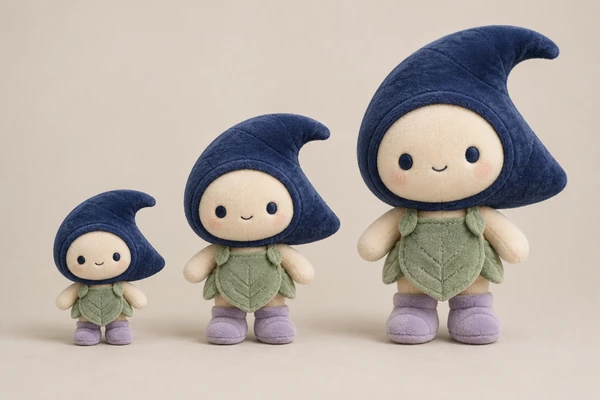
Keep a character plush collection consistent by defining the features that establish identity, then approving how each feature works at every size. Scaling all measurements by the same percentage rarely produces the same visual expression in fabric. Smaller versions may need simplified details, while larger versions may need different pattern shaping to preserve the character.
For an indigo moon gardener in a character plush collection, the crescent hood, cream face and leaf apron provide a recognizable system. The goal is a family resemblance that survives size changes, not an assumption that one approved sample automatically approves the entire range.
Rule 1: identify the features that must survive
List the character’s essential silhouette, facial expression, color relationships and distinctive accessories. Rank them. The crescent hood may be non-negotiable, while a tiny apron stitch could be simplified. Give the supplier a clear boundary between identity and optional decoration in the design brief.
Provide editable artwork and consistent reference views. Adobe’s raster and vector guide explains the difference between source artwork and pixel-based references. Keep both where useful, but ensure the supplier knows which file controls the current design.
Rule 2: define dimensions without confusing proportions
Record overall height and key landmarks such as face width, eye spacing and hood projection. Explain the measurement pose and whether soft projections are included. Use consistent units, with NIST conversion guidance when both metric and US customary dimensions are needed.
Separate nominal size from the visual proportions that make the character recognizable. A miniature version may need relatively larger eyes for readability. A larger version may require different panel shaping to avoid a flat-looking face. Ask the pattern team to explain these changes during the manufacturing review.
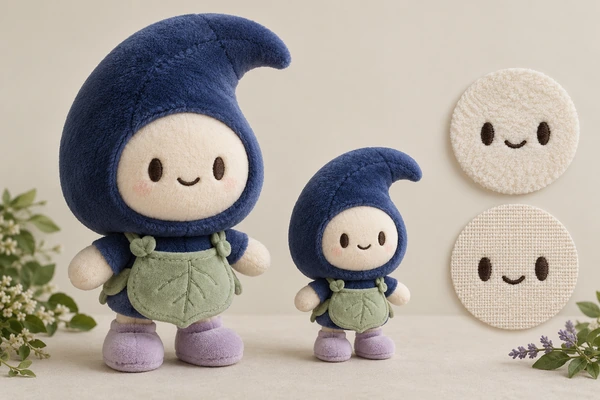
Rule 3: review decoration at its final scale
Approve embroidery sew-outs at each intended size before relying on a rendered mockup. Small gaps, highlights and curved smiles can change visibly when translated into stitches. Madeira’s stabiliser selector provides context for the relationship between embroidery support and fabric properties; the final sample must confirm the actual result.
Review simplified features side by side with the full-detail version. A removed eye highlight may be acceptable, while a changed mouth angle may alter the character’s personality. Record the approved simplification explicitly so it is not reversed or interpreted differently during a reorder.
Rule 4: approve colors as a family
Place every size under the same lighting with the approved swatches. Use physical color references alongside digital specifications. Check whether fabric texture or pile direction makes the small version appear lighter or the larger version darker.
If different fabrics are needed at different scales, define the required visual relationship. “Same color” is not enough when materials reflect light differently. Keep accepted samples together and photograph the family from a consistent distance, including front and side views.
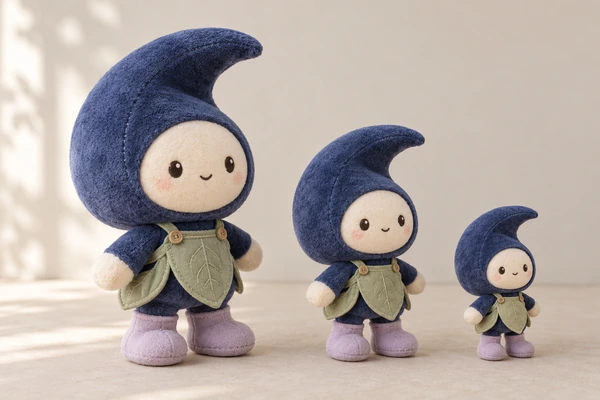
Rule 5: give every size its own approval record
| Decision | Keep in the master record | Confirm for each size |
|---|---|---|
| Character identity | Authorized artwork, essential silhouette, expression and features that must remain recognizable. | Front and side comparison with the intended size family; any accepted simplification. |
| Measurement | Units, named landmarks and whether ears, hood or other soft projections are included. | Finished measurements, pose and sample revision. Do not copy a larger sample's values into the smaller size. |
| Face and decoration | Approved color relationships and the features that define the expression. | Actual decoration size, placement and sew-out or print reference on the selected material. |
| Materials and construction | The agreed visual and handling requirements for the range. | Chosen materials, pattern and construction; any difference from the master direction and the reason. |
| Order identification | The rule used to name sizes and control revisions. | Size-specific product code, sample approval, label and packing references, with the applicable evidence. |
For US toys, use the CPSC toy safety guidance when reviewing the intended audience and applicable requirements. A change in size, component or construction can affect the assessment. Do not treat visual similarity as evidence that every version has the same compliance coverage.
Confirm supported care instructions for each construction, referring to ISO 3758 for care-labeling symbols where appropriate. Define distinct trade-item identities using the GS1 GTIN Management Standard and the retailer’s requirements, so size variants remain distinguishable through ordering and receiving.
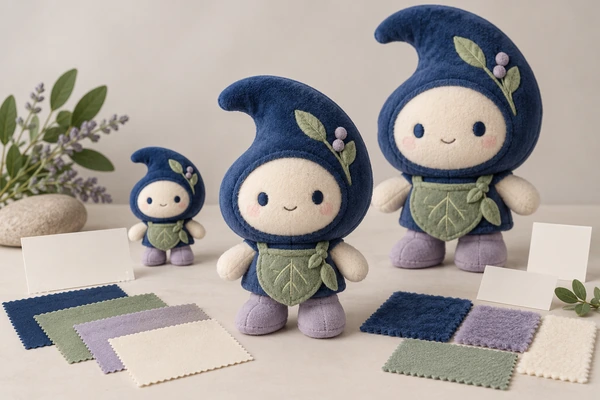
Before approval, ask someone who has not followed development to arrange the samples as a family. Record which version seems visually different and why. This informal review can reveal a misplaced smile or a hood that reads as another shape; it is not a replacement for technical checks. Compare the samples at ordinary viewing distance as well as close up. Keep the camera position consistent when documenting revisions, because perspective can exaggerate differences between sizes. Finally, show the proposed retail arrangement: a family that looks coherent in separate photographs may reveal color or expression differences when displayed together.
Close the range review with an affected-size list
When one face detail changes, list every size and mark it as unchanged, awaiting review or approved against a named revision. Record the reason for leaving a size unchanged. This makes it clear whether a comment applies to one sample or the entire collection.
Rule 6: control changes across the range
Use a master character record plus a separate record for each size. ISO 10007 configuration-management guidance provides a useful organizing principle. When a face or material changes, identify which sizes are affected and whether new samples are needed before accepting the revision.
Add family comparisons to the quality-control plan. Review the project FAQ and company introduction, then share your multi-size character brief with the proposed size ladder.
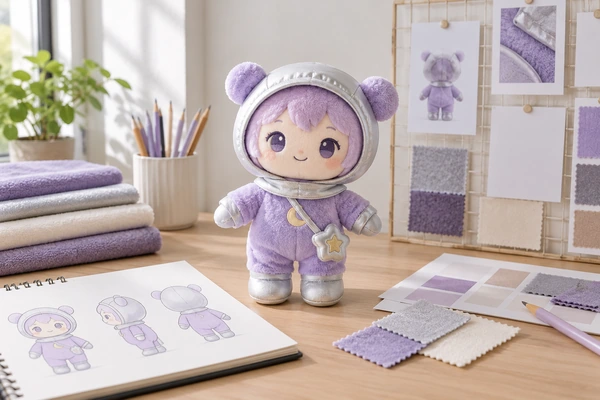
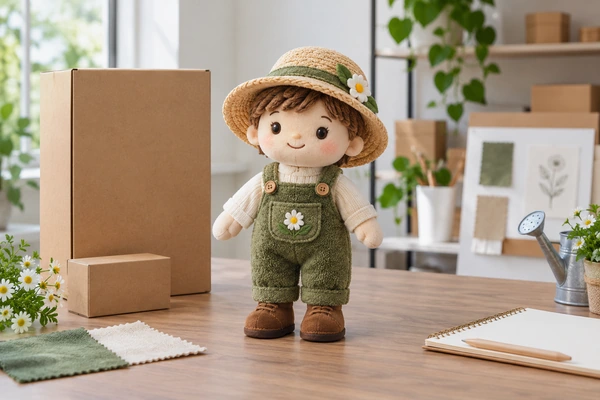
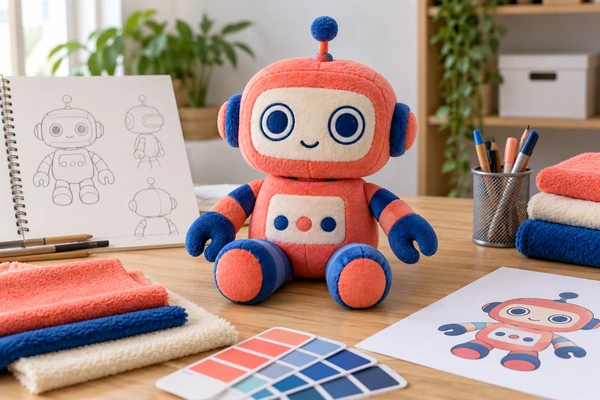
Images show original size-family concepts. Final proportions and construction require approval at each size.
Prepare your character plush specifications inquiry
Copy and complete this brief; mark unresolved items to confirm.
Company / contact:
Product / size / intended use:
Market / quantity / arrival date:
Character identity:
Product range:
Approval reference:
Email This BriefWhatsApp This Brief
Review and send it yourself, or paste it into our inquiry form.
[…] that must stay consistent: eye spacing, body proportions, ear shape and brand location. Review character consistency across sizes before extending the range. For each accessory, add assembly instructions using the questions in […]