
A useful seasonal plush brief separates the recognizable occasion from the construction needed to produce it. Tell the supplier who will buy the item, where it will be displayed and which features make the concept unmistakably Easter, Halloween or Valentine’s Day. Then define what can change without losing that identity.
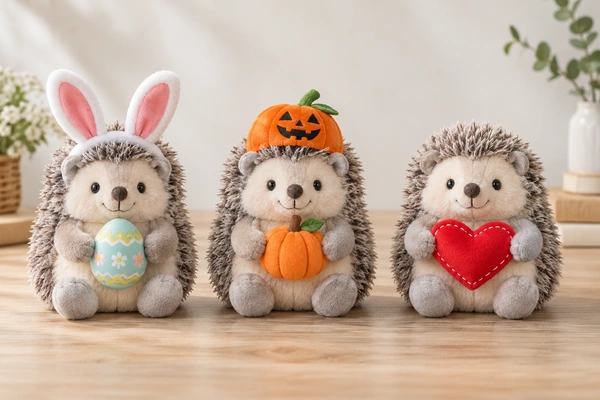
Consider an illustrative hedgehog collection: bunny ears for spring, a pumpkin accessory for autumn and a heart for February. Sharing a base character may simplify development, but each version still needs its own approved specification. Our holiday assortment planning guide helps connect that creative decision to quantities.
Easter: brief the basket, not only the bunny
State whether the plush will be the main gift, a basket filler or an accessory to a larger hamper. Specify the available space, target presentation and whether ears must remain upright after packing. A seated animal with long ears may exceed the display height even when its body seems compact. Use the Easter size and basket guide to define the measurement points.
Describe your palette through physical references and approved materials. Pastel does not identify a reproducible color. Pantone’s color systems guidance can help specify the reference family. Include an alternative if the preferred pile or trim cannot meet the schedule, but require approval before substitution.
Halloween: choose the level of fright
Write a short emotional direction: friendly, mischievous, gothic or theatrical. Translate it into facial expression, silhouette, contrast and accessories. “Spooky” alone could produce anything from a smiling pumpkin to an intense monster. Our cute versus spooky design comparison offers a starting point for matching the store audience.
Explain whether a pumpkin, hat or cape is sewn permanently, removable or supplied separately. Those choices affect assembly and potential hazards. For products intended as toys, review the applicable market framework using CPSC toy safety guidance and the European Commission’s toy safety resources. An occasion-themed appearance does not itself determine product classification or compliance.
Valentine’s Day: define how the message appears
Identify the recipient and gifting context: a partner, friend, colleague or general store customer. Decide whether the heart is part of the animal, held between its paws or carried on a removable accessory. Supply exact wording and artwork rather than asking the factory to improvise a romantic message. The Valentine’s plush packaging guide links product details with gift presentation.
If licensed characters, artwork or slogans are involved, document permission before sampling. WIPO’s copyright FAQ explains the basic rights questions, while WIPO’s trademark guidance addresses brand identifiers. Obtain appropriate professional advice when ownership or permitted use is unclear; supplier participation does not settle rights.
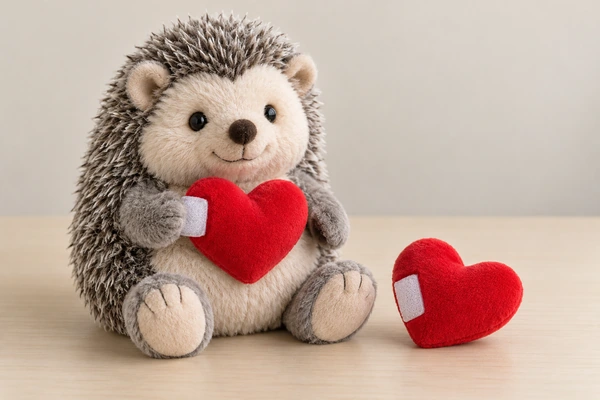
Give all three concepts the same production backbone
| Brief field | What the supplier needs |
|---|---|
| Base product | Views, dimensions, pose, fabric and filling |
| Seasonal difference | Accessory, expression, palette and artwork |
| Attachment | Permanent or removable construction and intended use |
| Packaging | Display format, assortment and label placement |
| Approval | Named decision maker, sample version and deadline |
Keep a shared character drawing and separate variant sheets. List the features that must stay consistent: eye spacing, body proportions, ear shape and brand location. Review character consistency across sizes before extending the range. For each accessory, add assembly instructions using the questions in our clothing and accessories production guide.
Make the intended age group and sales markets explicit. Small removable pieces deserve a specific assessment; consult CPSC small-parts guidance rather than relying on a generic warning label. For Canadian distribution, use Health Canada’s toy industry guide when preparing the compliance discussion.
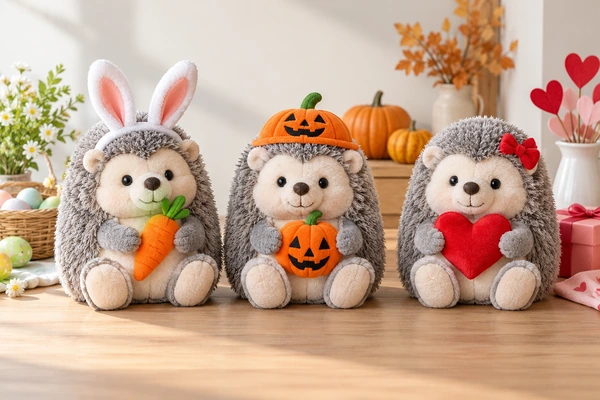
Make creative priorities visible
Rank the features before requesting quotations. For the illustrative hedgehog range, the friendly face might be essential, while a decorative ribbon could be optional. Marking those priorities lets the supplier propose a simpler accessory without changing the character’s identity. Ask for any proposed simplification in a separate comparison, including its effect on appearance, packing and approval work.
Also identify what the concept must avoid. A retailer may exclude glitter, loose decorative pieces or a specific expression because these conflict with its assortment brief. These are buyer preferences, not universal legal rules. Record approved wording for packaging separately from design inspiration, and give one person responsibility for resolving conflicting comments from merchandising, marketing and quality teams before the next revision is requested.
Ask for a readback before the sample starts
Request a supplier summary showing the proposed materials, attachment method, interpretation of artwork and unresolved questions. Mark each item approved, revise or awaiting information. Evaluate a packed sample, not only a loose toy: ISTA’s packaging procedures provide context for selecting suitable distribution testing. Finally, schedule the three seasons separately using the seasonal sourcing timeline, with explicit dates for artwork lock, sample review and retail readiness.
Prepare your seasonal buying inquiry
Copy and complete this brief; mark unresolved items to confirm.
Company / contact:
Product / size / intended use:
Market / quantity / arrival date:
Selling window:
Assortment:
Contingency:
Email This BriefWhatsApp This Brief
Review and send it yourself, or paste it into our inquiry form.