

Plan holiday plush quantities by separating the total seasonal commitment from the allocation across designs. Use comparable sales, available selling time, stock on hand and replenishment constraints to build a base case, then test lower and higher demand scenarios. Equal quantities across every design are a choice to justify, not a default rule.
A winter woodland holiday plush collection might include a cinnamon squirrel, snowy owl and evergreen tree. They can work together visually while serving different customer preferences and display roles. The buying plan should explain why each design receives its share of the order.
Define the selling window first
Record when stock must be available for merchandising, when demand is expected to concentrate and what happens after the holiday. Distinguish the required warehouse arrival from the public launch date. Include receiving, inspection, distribution and display preparation in the working schedule rather than treating arrival as immediate availability for sale.
Shopify’s seasonal forecasting guide provides planning context. Use your own evidence to identify the relevant window. A broad industry seasonal pattern does not establish the demand curve for a particular store, price point or new character collection.
Build the base case from comparable evidence
Start with prior unit sales and explain which products are genuinely comparable. Adjust for differences in selling days, distribution, price and promotion. Review stock availability alongside sales. A design that sold out early may have had more demand than the recorded units suggest, while a heavily discounted item may not support the same full-price forecast.
Use stock and sell-through records such as those described in Shopify’s inventory-report documentation. Keep assumptions visible when history is limited. For a new collection, a bounded test with clear review criteria may provide more useful information than a precise-looking forecast built from unrelated products.
Allocate by role, then check the totals
Assign each design a role: a familiar core option, a complementary character or a smaller exploratory choice. Shopify’s assortment-planning guide offers context for balancing variety and depth. Translate the roles into proposed units and document the reasoning. Do not assume the most visually prominent design automatically deserves the largest order.
For each design, a starting worksheet is: new units needed = forecast unit demand for the chosen selling window + chosen closing-stock reserve − usable opening stock − confirmed incoming units available within that window. Use zero when the result is negative. This is a planning model, not a demand forecast or a supplier order minimum.
Use the same time window and stock definition throughout. Exclude stock committed to other demand, damaged units and late incoming shipments. Check arrival dates against the timing of demand: an incoming shipment later in the window cannot prevent an earlier stock gap. Do not subtract inventory again if your forecast already represents net replenishment need. Define the reserve once; it is a management choice, not a standard percentage for plush toys.

Test three scenarios before committing
| Scenario | Compare before committing | Define the action while time remains |
|---|---|---|
| Lower demand | Possible remaining units by design, available space and the amount committed to stock. | Who can reduce a proposed allocation before order confirmation, or review redistribution and later selling options. |
| Base demand | The design mix against the intended display, selling window and available supply. | The quantities proposed for each design, their supporting evidence and the date to review the plan. |
| Higher demand | Potential stock gaps and the earliest confirmed arrival of any additional order. | The last date a reorder could still support the selling window. Do not assume an unconfirmed lead time will work. |
Compare the implications for cash, storage and display space, not only total units. If one design cannot be replenished within the season, identify that constraint before launch. Ask the supplier to confirm project-specific timing through the production planning process; do not treat an unconfirmed estimate as a guaranteed recovery option.

Turn the allocation into an executable order
Confirm minimums per design or color, carton multiples and fixed assortment rules in the collection brief. After rounding quantities, recalculate the total and the design shares. Small rounding changes across many variants can alter the commitment more than the buyer initially expects.
If minimum quantities or carton rounding increase the order beyond the plan, show the extra units and revised design shares before approval. Recheck the budget and selling window; changing the palette or quantity may be preferable to accepting an allocation that no longer fits the buying case.
Identify trade items using the relevant GS1 GTIN rules and keep packed dimensions consistent with GS1 measurement guidance. State whether cartons contain one design or a fixed mix. Receiving teams need to reconcile physical units with the purchase order without guessing.
Confirm delivery responsibilities and the named location using the ICC Incoterms overview. Review distribution packaging against suitable ISTA procedures where appropriate. A quantity plan is only useful if the intended units arrive in saleable condition.

Define an action owner for each review. A report is more useful when someone can decide whether to redistribute stock, change display emphasis or request replenishment while time remains. Record the decision and the evidence available at that moment. At season end, compare results with the original scenarios rather than rewriting the forecast to match what happened. This preserves learning for the next holiday buying cycle.
Set review points and learn from the season
Add design counts, package condition and assortment accuracy to the quality-control plan. For US toys, include the applicable assessment and evidence discussed in CPSC toy safety guidance. Quantity pressure should not leave required product checks undefined.
Schedule reviews while action remains possible. Record which designs sold, which were unavailable and how display or pricing changed. Review the seasonal sourcing FAQ and company introduction, then share your holiday allocation brief with scenarios and the required arrival date.
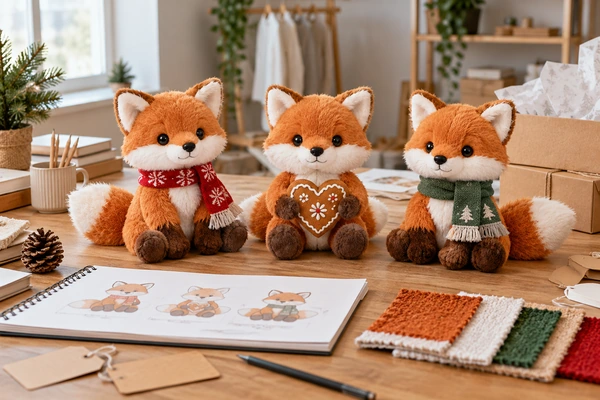
Images show original assortment concepts. Quantities must be based on retailer-specific evidence and confirmed supply constraints.
Prepare your seasonal buying inquiry
Copy and complete this brief; mark unresolved items to confirm.
Company / contact:
Product / size / intended use:
Market / quantity / arrival date:
Selling window:
Assortment:
Contingency:
Email This BriefWhatsApp This Brief
Review and send it yourself, or paste it into our inquiry form.


[…] may simplify development, but each version still needs its own approved specification. Our holiday assortment planning guide helps connect that creative decision to […]
[…] this decision to each design rather than the whole collection. Your holiday quantity plan might combine an undated reindeer with a smaller dated gift edition. Define quantities from […]