Before a plush doll factory can issue a useful quotation, it needs a defined character, approximate finished dimensions, construction expectations, quantities by variant, destination market, packaging scope and delivery requirement. Missing details do not always prevent an estimate. They do make the estimate conditional, so the assumptions must travel with the price.
Think of quotation readiness in three levels: ready to price, ready for a provisional estimate, or not ready for meaningful comparison. This approach helps a brand product manager decide what to finish internally and what to develop with a supplier.
Green: information that should be settled before quoting
First, explain what the doll represents and how it will be sold. Include the intended audience, countries of sale, launch date and expected order split. A single total for several costumes leaves too much room for interpretation. Identify each size, color and accessory combination as its own line.
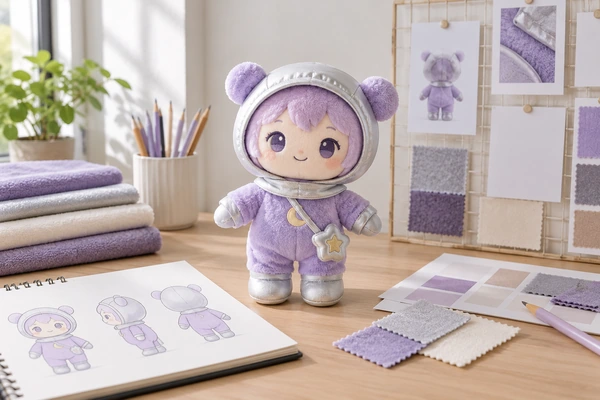
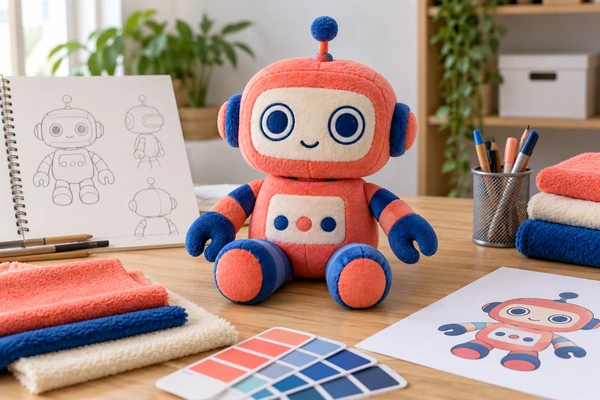
Provide front, side and rear artwork wherever the character’s shape is defined. If only the front exists, explicitly commission development of the remaining views. Adobe’s raster and vector explanation helps teams distinguish an editable artwork file from a screenshot. Neither file type automatically supplies missing construction decisions.
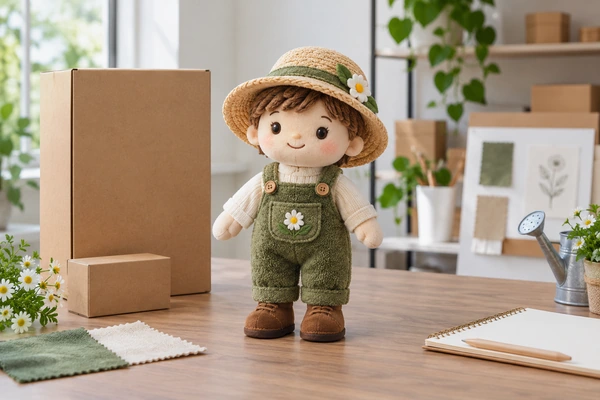
Use a character plush design brief to record the silhouette, facial expression and features that must survive translation into fabric. Reviewing the plush dolls and characters category can help communicate the intended product format without treating another design as permission to reproduce it.
Amber: details that can be quoted with named assumptions
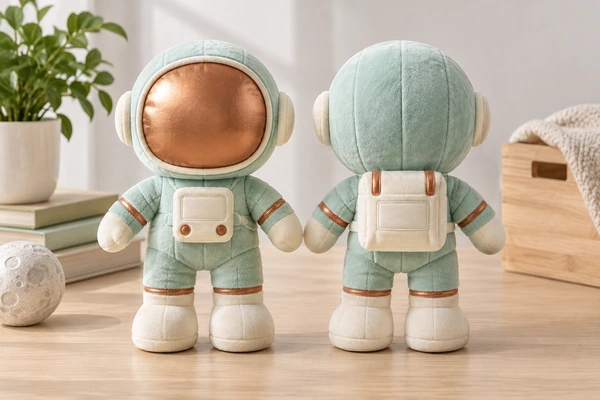
You may not yet know the exact pile, filling amount or embroidery method. Give a reference and explain the desired result: a firm sitting posture, a smooth face or a soft squeezable body. Ask the factory to identify its proposed construction and any cost difference between alternatives.
Color deserves its own approval route. Record the color system, reference and priority; do not write only “match the attached image.” Pantone’s synthetic textile guidance is useful background for physical evaluation. Final acceptance should refer to an agreed sample, not a different screen on each desk.
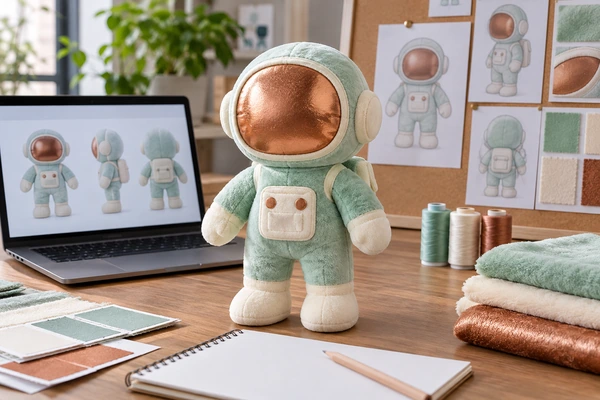
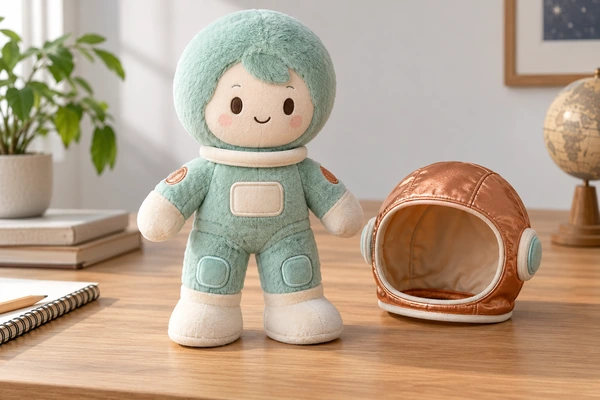
For accessories, list what is sewn on, removable or separately packed. A soft fabric helmet and a rigid decorative shell are different projects even when their drawings look similar. Our guide to clothing and accessories in production helps identify decisions that affect labor and assembly.
| Unresolved point | Acceptable quotation response |
|---|---|
| Fabric not selected | Name the proposed fabric and price alternatives separately |
| Rear artwork missing | Identify development work and approval milestone |
| Packaging undecided | Quote defined options with packed dimensions |
| Quantity uncertain | Price stated scenarios with validity dates |
Red: issues that need resolution, not a guessed price
Unclear artwork rights, incompatible deadlines or an undefined intended user should trigger questions. Confirm who authorizes manufacture and whether the permission covers the planned products and markets. WIPO’s copyright FAQ provides an introduction to licensing; project-specific rights still need proper review.
State the intended age group and markets before the supplier proposes eyes, fasteners or detachable components. Use the CPSC toy-safety resource when discussing applicable U.S. requirements. “Promotional” or “collectible” wording alone should not replace a product classification assessment.
If launch timing is fixed, distinguish required warehouse arrival from dispatch. Ask which development steps depend on buyer approvals, material availability or testing. The supplier should flag an impossible assumption rather than compress every stage into an unsupported promise.
What belongs in the quotation’s commercial scope?
Request separate sample, tooling, decoration, packaging and unit charges where relevant. Clarify how many sample revisions are included and what changes restart costing. Describe the revision process using a dated file list; configuration-management guidance offers a useful framework for controlling versions. Read about changes during plush sampling before promising exact reproduction of every drawn detail.
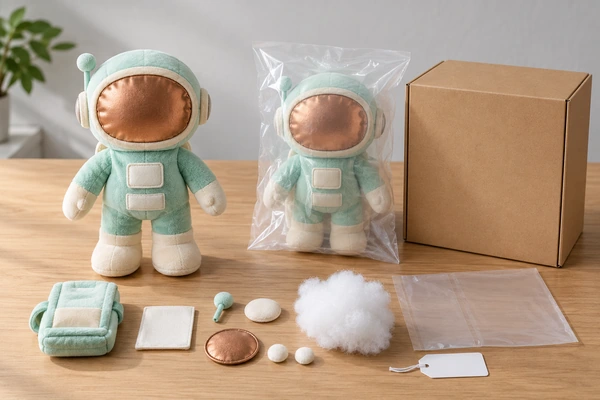
Include labels, barcode artwork, protective bags, cartons and any assembly. GS1’s barcode workflow helps assign identification responsibilities, while ISTA’s procedures support a discussion of appropriate transport testing. Specify the delivery basis and named place with reference to ICC Incoterms rules; a unit price alone does not describe delivered cost.
A five-minute readiness check
Open the attachment folder as though you are seeing it for the first time. Can you identify the current artwork, quantities, audience, packaging and delivery requirement without searching an email chain? Put unanswered questions on one page. Label the quote provisional until those items are settled.
Then align the private-label packaging brief with the product brief, define who approves each stage of custom development, and submit the quotation package. The best starting document makes uncertainty visible and gives both teams a practical route to a confirmed specification.
Prepare your quotation comparison inquiry
Copy and complete this brief; mark unresolved items to confirm.
Company / contact:
Product / size / intended use:
Market / quantity / arrival date:
Comparable scope:
Cost breakdown:
Commercial basis:
Email This BriefWhatsApp This Brief
Review and send it yourself, or paste it into our inquiry form.