When a seasonal plush buying budget is limited, prioritize designs by their role in the assortment, evidence of demand and total commitment. Begin with a small set of clear buying decisions rather than dividing the budget equally across every attractive concept. The strongest selection is one your store can present, sell and replenish within the season.
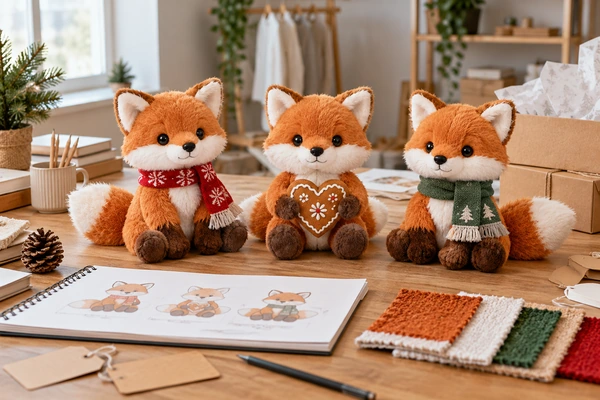
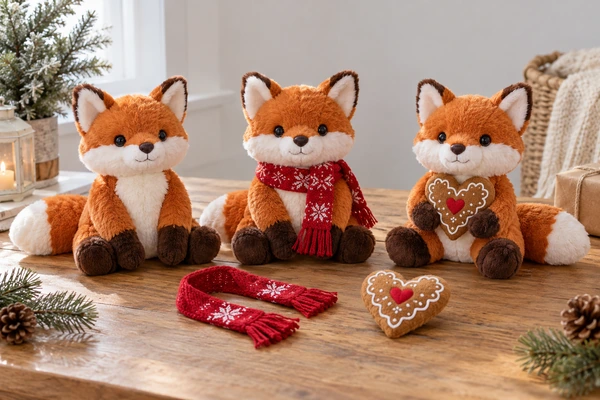
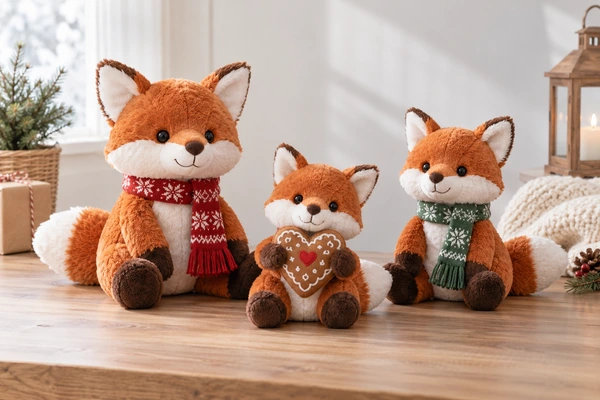
This workshop is for independent retailers choosing among several holiday concepts. An illustrative fox collection might offer a winter scarf, a gingerbread accessory and a heart variant. These are planning examples, not sales forecasts. Start with your holiday quantity plan and a realistic spending ceiling.
Step one: calculate the money already committed
Separate product cost from development, packaging, freight, handling and other costs relevant to the order. Reserve a clearly identified amount for uncertainty rather than treating every available dollar as purchasing power. The custom plush cost guide helps identify expenses that a simple unit-price comparison misses.
Clarify the delivery term and named place using ICC’s Incoterms resources. Ask the supplier which charges are included and which remain the buyer’s responsibility. Use comparable assumptions for every candidate design so a low quoted price does not hide a larger overall commitment.
Step two: give each design a job
Assign roles such as familiar core gift, distinctive seasonal feature or small exploratory addition. A design without a clear shopper, price position or display location should not receive money merely to make the range look larger. Use the balanced retail range guide to assess whether two candidates serve the same purpose.
| Question | Evidence to consider |
|---|---|
| Who buys it? | Observed customer behavior and gifting occasion |
| Where does it sell? | Specific fixture, online collection or promotion |
| What makes it distinct? | Silhouette, story, size or recipient |
| What happens if it remains? | Carryover suitability, storage and markdown exposure |
Step three: examine evidence without overstating it
Review prior sales, stock availability, returns and promotions together. A design that sold fewer units may have been unavailable for much of the selling period. Conversely, strong sales during a deep discount do not prove demand at the planned ticket price. Shopify’s inventory reporting documentation explains relevant measures such as sell-through and remaining inventory.
For new designs, use buyer feedback or a limited introduction as directional evidence. Avoid converting a handful of enthusiastic comments into a precise forecast. Write down the uncertainty beside each candidate and identify what information could change the decision. Keep the analysis connected to the seasonal sourcing calendar, because late evidence may arrive after reorder opportunities have closed.
Step four: compare simplifications before cutting quality
Ask whether several designs can share a base body, material or packaging format while retaining their selling point. Fewer colorways may reduce complexity, but confirm the actual effect with the supplier instead of assuming it lowers every minimum order. Review the color and assortment planning approach for organizing variants.
Keep each saleable variant identifiable. GS1’s barcode implementation guidance helps plan identification before labels are printed. If multiple designs use the same physical color reference, specify its system with help from Pantone’s color systems guide. Shared components still require approved specifications.
Step five: protect the non-negotiable requirements
Do not use a tight budget to postpone product classification, safety review or required documentation. For relevant toy projects, consult CPSC toy guidance and the European Commission’s toy safety resources. Select fewer designs if that is necessary to support an appropriate review of each.
Likewise, keep packaging suitable for the distribution route. ISTA’s procedures support a discussion of relevant packaging evaluation. Review the sample sign-off checklist before committing to bulk quantities. A cheap sample correction is preferable to receiving a seasonal order that misses the intended presentation.
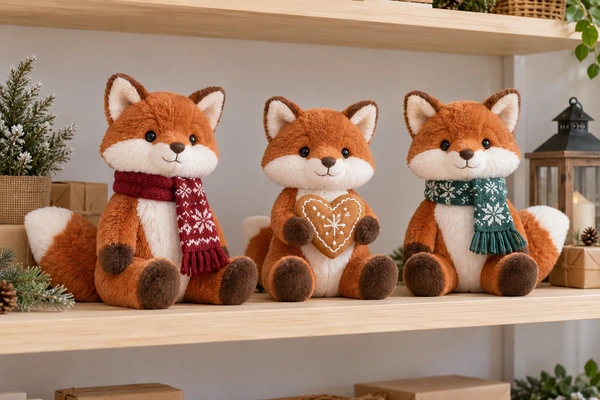
Test the shortlist against a simple downside scenario: one featured design sells more slowly than expected while a familiar core style needs replenishment. Would the initial commitment leave any practical flexibility? This is a planning exercise, not a prediction. Consider reducing overlapping variants or deferring a new accessory before removing the store’s essential range. Write down which assumption justifies the allocation and what evidence would overturn it; this makes the next seasonal review more useful.
Step six: record a decision and a review trigger
For each selected design, record the quantity, total commitment, selling role and evidence behind the decision. Keep rejected or deferred concepts in a separate list with the reason. Identify when sales will be reviewed and which conditions would support a reorder, a display change or no further purchase.
Avoid creating unsupported environmental claims to make a simpler design sound more valuable; FTC guidance on environmental claims explains the need for substantiation. Present the actual product benefits clearly, then send your shortlisted designs, budget assumptions and required dates through a seasonal plush inquiry.
Prepare your quotation comparison inquiry
Copy and complete this brief; mark unresolved items to confirm.
Company / contact:
Product / size / intended use:
Market / quantity / arrival date:
Comparable scope:
Cost breakdown:
Commercial basis:
Email This BriefWhatsApp This Brief
Review and send it yourself, or paste it into our inquiry form.