
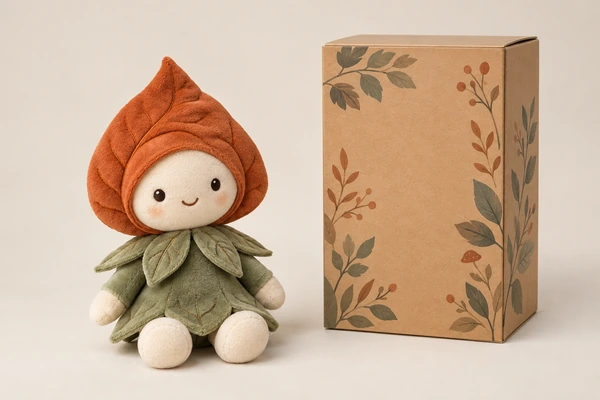
Plan private label plush dolls by assigning a clear job to each information surface. Sewn labels carry information that needs to remain with the product; hangtags support retail communication; packaging identifies and presents the saleable unit. Confirm applicable requirements for your product and market before deciding how much space each surface needs.
A terracotta leaf fairy in a private label plush doll range provides an example. The character should remain visually coherent, but branding decisions must also work for receiving, merchandising, customer use and replenishment. Start with the information hierarchy before choosing decorative finishes.
Layer 1: the identity that belongs to the doll
Specify the brand owner, authorized artwork and product naming convention. Confirm who may use the character and in which markets or channels. WIPO’s character merchandising discussion offers background on licensing considerations. A supplier receiving an image does not establish the buyer’s right to reproduce it.
Put the approved identity files in the private label design brief. Distinguish editable source artwork from reference images using Adobe’s raster and vector explanation where helpful. Include version names so the label designer and sample maker use the same current assets.
Layer 2: sewn information
List the information required for the actual product, then choose label size, material and placement. Consider readability, contact with the user and how the label sits beside the costume or body seam. Approve the label on the stuffed doll, because a position that looks discreet in flat artwork may twist or become hidden after filling.
The FTC textile and wool labeling guide is a relevant US reference for scope and exemptions; do not assume every textile-containing product follows identical rules. Review the actual classification and destination requirements. Supported care wording and symbols also need consideration; ISO 3758 provides care-symbol guidance.

Layer 3: the retail hangtag
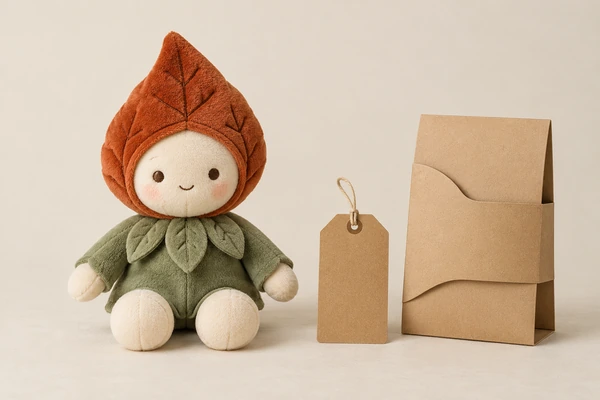
Give the tag a defined purpose: a short character introduction, collection name, brand message or product identifier. Keep the main message readable at the final printed size. Avoid filling the tag with generic claims that repeat the packaging without helping a buyer choose or understand the doll.
Confirm attachment location and how the tag hangs on a shelf. Check that it does not cover the face or pull the leaf hood out of shape. Coordinate the attachment during the manufacturing review. Treat tag fasteners and other components as part of the complete product assessment, particularly for children’s toys.
For US toys, consult the CPSC toy safety guidance when planning applicable information and evidence. Marketing copy should not imply that a brand name, factory statement or decorative quality seal proves compliance.
Layer 4: the saleable package
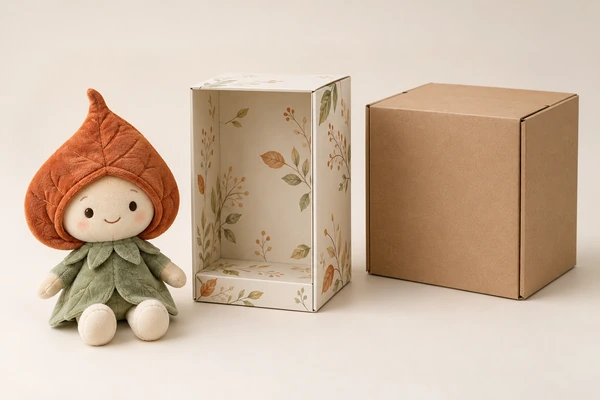
Define whether the doll is sold loose, with a sleeve, in a display carton or in a gift box. Identify the saleable unit and any assortment structure. Use the GS1 GTIN Management Standard with retailer requirements to plan identifiers. Check scanning access on the actual packed item.
Map each message to one primary location. The package front may introduce the character, while another panel carries detailed product information. A sewn label should remain readable after unpacking. A hangtag can tell a short story without becoming the only place where essential permanent information appears.
Layer 5: claims and change control
Review environmental wording against relevant guidance such as the FTC Green Guides summary. Keep claims tied to evidence and scope. A recycled carton does not establish recycled content in the doll, and an uncoated paper appearance does not itself support an environmental statement.
Use ISO 10007 configuration-management principles to connect label, tag and packaging revisions. Record the artwork file, approval date and affected product variants. If a care instruction or product name changes, identify every surface that needs revision before approving the next print run.
Build a short surface-by-surface register listing the message, file owner, revision and approval status. Include language versions and variant-specific identifiers. When a correction arrives, update the register before sending replacement artwork. This reduces the chance that a current hangtag is packed with an obsolete box or that two sizes share an identifier unintentionally. Keep approved print samples with the doll reference for future comparison.
Approve the complete information set
Review printed proofs and a fully packed sample together. Check spelling, language, contrast, attachment, visibility and consistency with the order sheet. Add these points to the quality-control plan. Ask receiving staff to identify the item from its package and confirm that the information supports the way stock will be handled.
Keep a final artwork register and identify who authorizes changes. Review the private label sourcing FAQ and company introduction, then share your doll branding brief with markets, languages and intended retail format.
Images illustrate original branding concepts. Blank sample labels are not finished regulatory artwork.
Your pack-out planning record
| Confirm | Record with your specification |
|---|---|
| Selling unit | Every included component and its quantity |
| Packing layout | Pack dimensions, placement, protection and visible information |
| Receiving check | Carton mix, identifiers and an approved packed sample |
Prepare your pack-out planning inquiry
Copy and complete this brief; mark unresolved items to confirm.
Company / contact:
Product / size / intended use:
Market / quantity / arrival date:
Selling unit:
Packing layout:
Receiving check:
Email This BriefWhatsApp This Brief
Review and send it yourself, or paste it into our inquiry form.
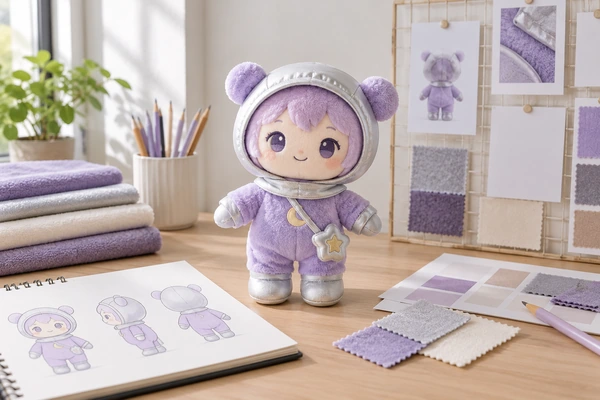
[…] labels and packaging as separate artwork tasks in your private-label plan. Finally, send the package to Shinegifts with a short list of open decisions. Clear questions make […]