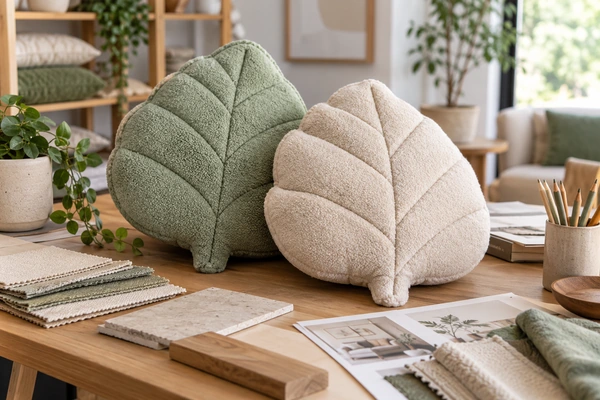

Specify custom plush cushion filling weight and finished dimensions as separate requirements, then connect both to an approved physical sample. Filling weight describes how much fill is used; finished dimensions describe the assembled shape under agreed measuring conditions. Neither value alone guarantees the firmness, recovery or silhouette a buyer expects.
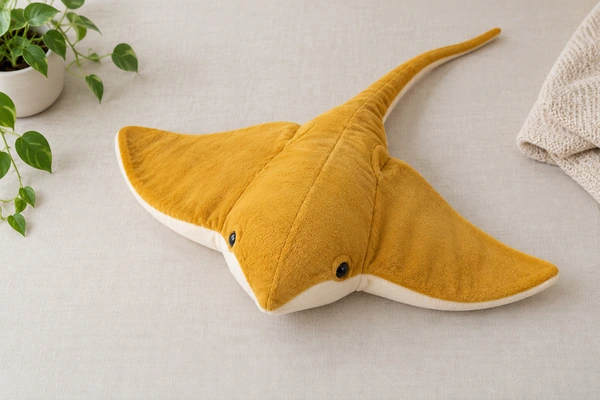
A shaped cushion makes this distinction especially important. An illustrative stingray cushion has a broad body, narrow tail and curved wings. Two samples can contain the same filling mass yet look different because the fill is distributed differently. Start with our size and shape specification guide, then build the measurement sheet below.
Define what is being weighed
State whether the requirement refers to filling only, the complete cushion, a removable insert or the packed retail unit. Do not use the term “weight” without a definition. A finished product’s mass also includes fabric, thread, closures, labels and other components. Ask the supplier how filling mass is controlled and recorded during production.
Identify the fill material and relevant characteristics in the fabric and filling brief. A change of fill can alter the feel even when the mass stays constant. Use consistent units throughout the specification; NIST’s conversion reference helps avoid confusion when teams work in different measurement systems.
Draw the measurement points
Show dimension lines on a clear drawing of the finished product. For the stingray example, distinguish body width, body length, total length including the tail and thickness at a named location. State whether the wings lie naturally or are gently extended. Do not stretch a soft product to obtain a preferred reading.
| Field | What to specify |
|---|---|
| Width | Named endpoints and product orientation |
| Length | Whether tails or other extensions are included |
| Thickness | Location and whether a load is applied |
| Filling mass | Fill-only definition and measurement method |
| Tolerance | Agreed limits for each named characteristic |
For a removable design, specify the cover and insert separately. Our removable cover guide explains the related fit questions. A cover’s flat dimensions are not automatically the same as the assembled cushion’s dimensions, particularly when curved seams create volume.
Set the condition before measurement
Agree how the product is unpacked, fluffed and rested before measurement. Specify the resting surface and measuring equipment. If compression packaging is used, connect the measurement timing to your shape recovery protocol. Avoid comparing a freshly compressed sample with a fully relaxed reference.
If dimensions after cleaning are part of the requirement, define the cleaning process and evaluate it separately from the as-delivered state. ISO 6330 concerns domestic washing and drying procedures; it should not be assumed to represent a hotel’s industrial laundry. AATCC’s standards resources can support selection of appropriate textile evaluations with a laboratory.
Use a sample to connect numbers with feel
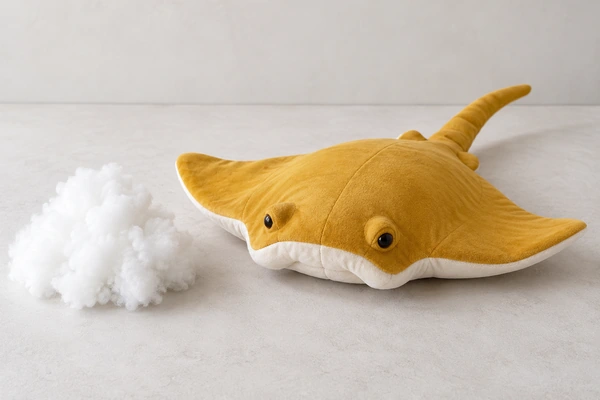
Ask for development samples that allow the team to compare the proposed filling and distribution. Record support, hand feel, lumpiness and the appearance of narrow sections. Do not approve one sample’s shape while retaining another sample’s filling specification without checking the combined result. Keep photographs as location references and the physical sample as the tactile reference.
For each revision, document which variable changed. Altering the pattern, fill mass and fill material simultaneously makes it harder to understand why the result improved. ISO’s configuration management guidance provides a useful structure for maintaining version identity. Add the final values to the bulk cushion inspection checklist.
Agree reasonable tolerances with the supplier after the construction is understood. Limits should reflect function, appearance and measurement repeatability, not an arbitrary percentage copied from another product. Ask operators on both sides to measure the same sample using the written method. If their results differ materially, improve the method before tightening the tolerance.
Confirm that any care instructions reflect the approved construction and supporting evaluation. ISO 3758 addresses textile care symbols; it does not establish that a particular cushion tolerates the process shown. If washing changes the filling distribution or dimensions beyond the agreed requirement, review the design and care claim together. Record whether the acceptance criteria apply before cleaning, after a defined cleaning sequence or at both stages, so the supplier and receiving inspector judge the same condition.
Carry the specification into production
Require records that connect the approved fill and fabric to production lots. GS1’s traceability resources explain the identification principle. Ask how filling equipment, scales and in-process checks are managed within the supplier’s quality system; ISO’s quality management overview provides general context, not proof of the supplier’s performance.
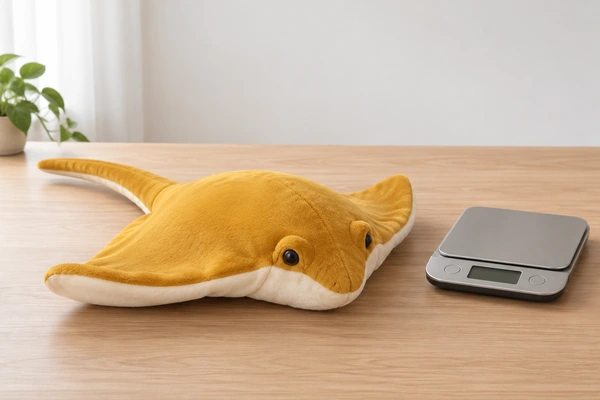
Review the final packing arrangement and relevant transport evaluation with reference to ISTA procedures. Packaging can affect the condition in which dimensions are checked after delivery. Compare quotations against the same measurable brief using the supplier quote comparison guide, and include the drawing, measurement method and approved sample details in your custom cushion inquiry.
Prepare your filling specifications inquiry
Copy and complete this brief; mark unresolved items to confirm.
Company / contact:
Product / size / intended use:
Market / quantity / arrival date:
Fill reference:
Construction:
Recovery check:
Email This BriefWhatsApp This Brief
Review and send it yourself, or paste it into our inquiry form.