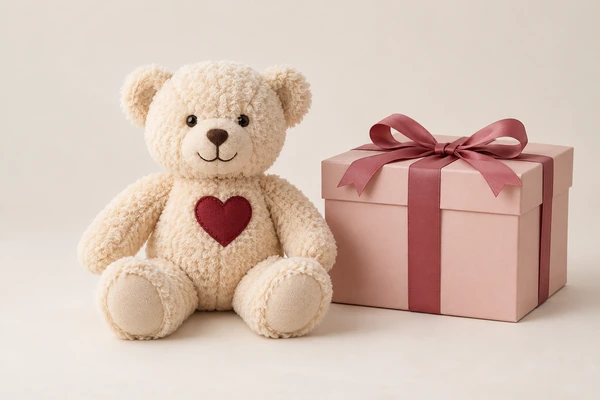
Choose Valentine’s Day plush bears by reviewing the whole gift experience: the bear’s expression, heart treatment, package fit and presentation after transport. Approve these elements together before ordering. A striking heart detail can lose its effect if a sleeve hides it, while an oversized gift box can make a carefully chosen bear feel poorly presented.
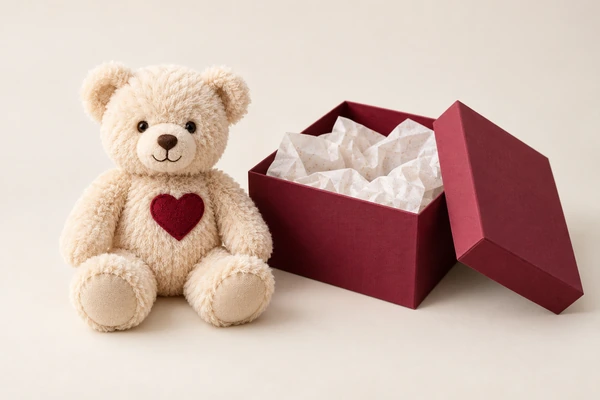
Imagine opening a cream bear with a burgundy heart from a seasonal plush collection. Use the following unboxing review to decide what the recipient should notice at each stage. This is a design exercise, not evidence of sales performance or a ready-made assortment recommendation.
First impression: what does the shopper see?
Begin at shelf distance. Check whether the bear, heart and gift message read as one composition. A contrasting heart can be the focal point, but repeated patterns, ribbons and large packaging graphics may compete with it. Compare a restrained presentation with a more decorative option using physical mockups of the intended size.
Define the role of this product in the wider range. Shopify’s assortment-planning guide provides retail context for balancing variety and depth. Decide whether the bear is an entry gift, a centerpiece or part of a coordinated display before adding colors simply to increase the number of choices.
The reveal: is the heart part of the bear?
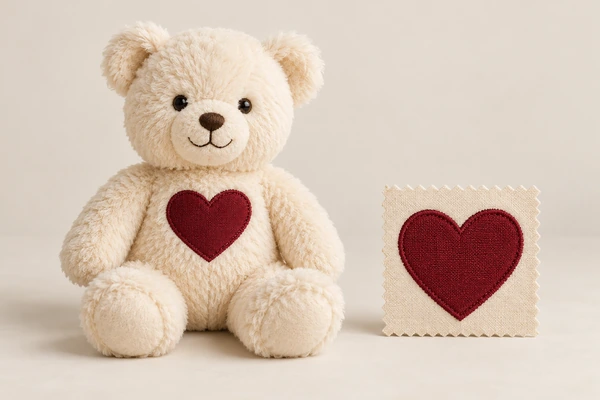
Specify whether the heart is an embroidered motif, sewn applique, attached cushion or removable accessory. These are different constructions with different development questions. Show placement, outline, edge treatment and the desired relationship to the arms. Include the decision in the custom design brief.
For an applique, review the sewn edge and how it lies on the stuffed chest. For embroidery, approve a sew-out on the chosen fabric; Madeira’s stabiliser guidance gives useful context. For a separate heart, review its attachment and intended handling rather than assuming a decorative connection is sufficient.
The touchpoint: does the sample match the intended message?
Review the face, hand feel and color relationship together. Compare the cream body and burgundy heart under consistent lighting. Use physical color references alongside screen artwork. Record whether the heart should match the package exactly or simply coordinate with it.
Keep wording appropriate to the intended audience and channel. A romantic slogan may narrow the gifting occasion; a simple heart may allow broader interpretation. Check rights to any supplied character, phrase or branded artwork, using WIPO’s character merchandising discussion as background where relevant.
The box: does presentation survive handling?
Ask for a packed sample, then unpack it in the same sequence a recipient would. Check that the face and heart are visible, ears are not sharply folded and removing the bear does not require excessive rearrangement. Record box dimensions, inserts, tissue and assembly steps. A sample photographed without its transport packaging cannot answer all these questions.
Review the packaging through the production planning process. Use relevant ISTA procedures when assessing distribution protection. Gift packaging and shipping protection may serve different roles; identify which components are included in the quotation and who assembles them.
The information: what must remain visible?
Plan product identification, required information and retail scanning before approving decorative layouts. The GS1 GTIN Management Standard helps structure trade-item identification. Confirm retailer-specific needs and avoid placing essential information where tissue, a ribbon or the bear’s body conceals it.
For US toys, review the CPSC toy safety guidance for the actual intended product. Where small components or removable accessories are involved, its small-parts guidance is also relevant. A seasonal theme does not determine the applicable age classification or assessment.
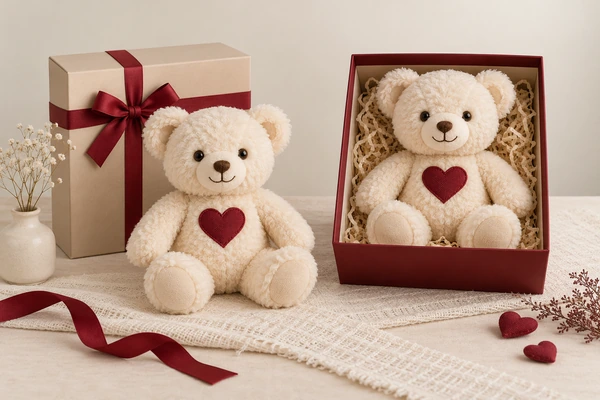
Test the display with the actual range rather than reviewing one bear in isolation. Place neighboring gifts at the intended shelf spacing and check whether the heart remains visible. If boxed and unboxed versions share a design, give staff an easy way to distinguish the saleable formats. Consider what happens when customers pick up and replace the item: a presentation that requires careful restyling after every interaction may be difficult to maintain. Record the acceptable display condition and any replenishment instructions alongside the packaging specification, so merchandising expectations do not depend on the original sample photograph alone.
The buying decision: approve a complete gift
Keep an unboxed reference and a packed reference. Add heart placement, face appearance, package condition and assortment accuracy to the quality checklist. Record the arrival date needed for merchandising, then work backward through approval, production, inspection and delivery with the supplier.
Before release, compare the approved sample with the order sheet line by line. Confirm which color, heart construction and packaging belong together. Review the sourcing FAQ and company introduction, then share your Valentine’s gift brief with quantity and required arrival date.
Images illustrate original gift concepts. Final construction and packaging require physical approval.
Your pack-out planning record
| Confirm | Record with your specification |
|---|---|
| Selling unit | Every included component and its quantity |
| Packing layout | Pack dimensions, placement, protection and visible information |
| Receiving check | Carton mix, identifiers and an approved packed sample |
Prepare your pack-out planning inquiry
Copy and complete this brief; mark unresolved items to confirm.
Company / contact:
Product / size / intended use:
Market / quantity / arrival date:
Selling unit:
Packing layout:
Receiving check:
Email This BriefWhatsApp This Brief
Review and send it yourself, or paste it into our inquiry form.