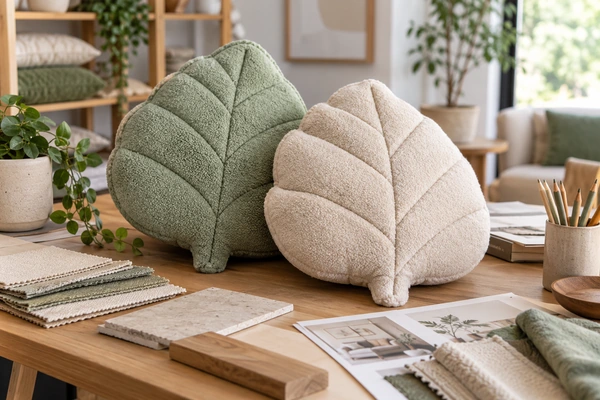

A custom plush pillow brief should define how the product will be used, measured, cleaned, presented and reordered. Hotels and retailers may choose the same silhouette but need different operational details. Record those differences before requesting a sample, so the quotation describes the complete product and its intended channel.
Consider a coastal wave-shaped pillow in sand and seafoam. A hotel may prioritize reliable cover replacement and room consistency; a retailer may prioritize shelf presentation and consumer care information. Start with the relevant plush pillow format and give the supplier a brief that can be checked field by field.
Page one: purpose and finished appearance
State whether the pillow is decorative, intended for lounging or designed for another use. Describe the location, expected users, contact with other textiles and any buyer-specific requirements. Avoid making a general decorative brief carry an unreviewed infant-sleep or therapeutic claim. Include the markets where the product will be supplied.
Attach a drawing showing overall dimensions, thickness and any protruding shape. Explain whether measurements include piping, fins or other extensions. Use one primary unit and confirm conversions with the NIST conversion reference. Our size and shape guide helps make the measurement method unambiguous.
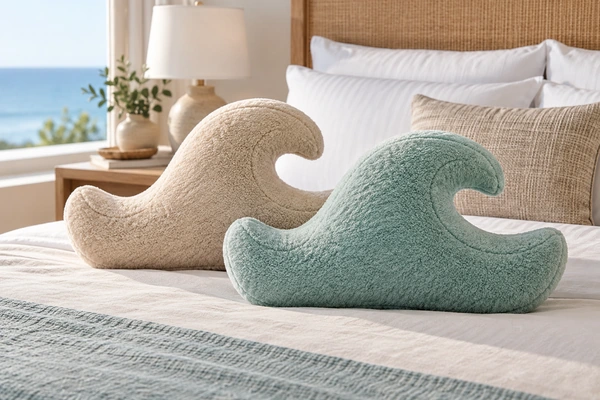
Page two: materials, filling and color
Name the proposed outer fabric, pile direction, backing, lining and filling. If these are undecided, describe the required result and ask for clearly identified options. A fuller outline, a softer feel and easier storage may pull the design in different directions. Compare fabric and filling choices using actual samples.
Specify the physical color reference and approval method. Pantone’s synthetic-textile guidance provides background for controlled evaluation. Ask how replacement covers or later batches will be compared with the retained reference, especially when pillows will sit together in one room.
Page three: access and cleaning
For removable covers, describe the opening, zipper placement, insert dimensions and the process for removing and refitting the insert. Test those steps on a finished sample. Read the removable-cover questions before choosing a closure solely from a photograph.
Tell the supplier the intended cleaning process. ISO 6330 addresses domestic washing and drying procedures for textile testing; it should not be treated as proof of suitability for a hotel’s commercial laundry. Confirm the appropriate evaluation with the laundry operator and testing provider.
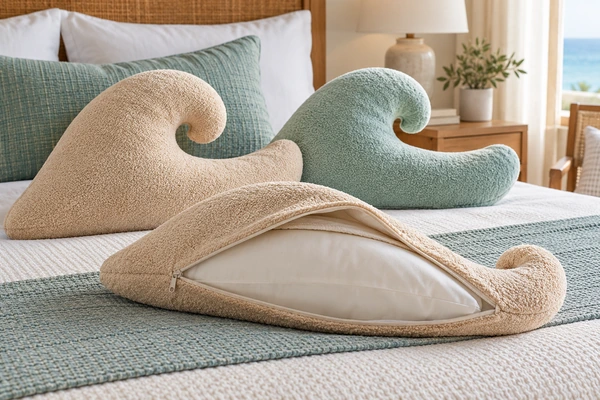
Care information must match supported performance. Review the scope of ISO 3758 care labeling and determine which labeling rules apply in the destination. For US textile projects, the FTC textile-labeling guide is a useful starting point. Ask who supplies and approves the final wording rather than leaving a generic label in the sample.
Add the fields that distinguish the sales channel
| Hotel brief | Retail brief |
|---|---|
| Room type and placement | Shelf, basket or online presentation |
| Laundry process and replacement covers | Consumer care instructions and unpacking |
| Delivery by property or room allocation | SKU identification and case assortment |
| Retained room-standard sample | Approved photography and packaging proof |
For hotel deliveries, distinguish purchasing units from room allocations. If each room uses two pillows, say whether cartons should be grouped by room, floor or property. For retail, specify whether a mixed carton may contain several colors and how receiving staff will identify them. These details prevent a correct product from arriving in an impractical packing arrangement.
Page four: measurable approval and packing
Ask reviewers to use the same sample sequence: inspect appearance, measure the rested pillow, remove and refit the cover if applicable, then assess the agreed cleaning and packing trials. Record which sample underwent each step. A washed sample and an unused sample should not be compared without noting their different histories. Keep photographs of relevant seams and openings alongside the written findings.
For the wave-shaped design, pay particular attention to the curved tip. It may look attractive on a table yet fold over in its intended display position. Decide whether that behavior is acceptable for the product concept before altering filling or adding structure. Any construction change should return to the relevant approval checks.
List acceptance questions for seams, shape, filling distribution and closures. Use the cushion quality checklist to organize the inspection. Where surface wear matters, discuss relevant methods in ASTM’s textile standards catalog; the test method and acceptance level should be selected for the material and use.
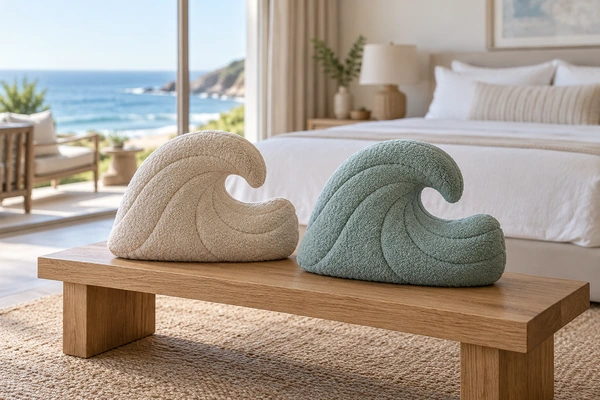
Define the packed state and any recovery period after unpacking. If compression is proposed, review shape recovery checks on the actual sample. Discuss distribution-specific transport evaluation using ISTA procedure guidance. For retail identification, assign barcode responsibility using GS1’s preparation steps.
Finish the brief with quantities, approval owners, required arrival dates and reorder expectations. Label open questions clearly. Send the completed document to Shinegifts so product construction, packaging and delivery assumptions can be reviewed together.
Prepare your cushion specifications inquiry
Copy and complete this brief; mark unresolved items to confirm.
Company / contact:
Product / size / intended use:
Market / quantity / arrival date:
Finished dimensions:
Construction:
Use and care:
Email This BriefWhatsApp This Brief
Review and send it yourself, or paste it into our inquiry form.