

The cost of custom stuffed animals depends on construction, materials, decoration, quantity, packaging and delivery scope. Size matters, but it is only one input. A small character with many panels and separate accessories can require more work than a larger, simpler design. Compare quotations against the same written specification before deciding which offer is economical.
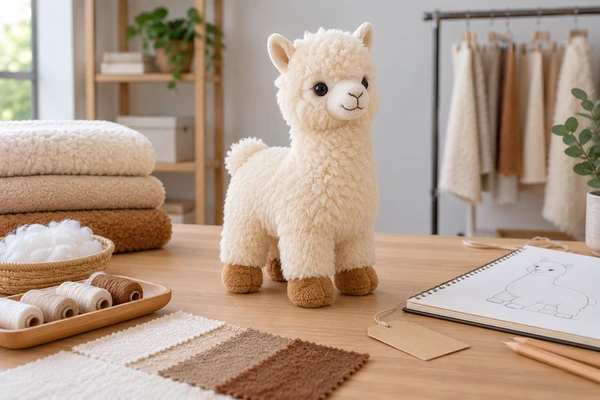
Imagine a cream alpaca concept for a retail collection. One version has a simple embroidered face; another adds patterned clothing, several fabric textures and a gift box. Both are alpacas, yet they are different production projects. Start with the intended stuffed animal format and separate essential identity features from optional additions.
Construction: count the decisions behind the silhouette
Ask how the shape will be divided into sewn panels and how narrow sections will be turned and filled. Curved horns, small hooves, layered ears and a long neck can introduce operations that are not obvious in the front-view artwork. Request the supplier’s reasoning when a proposed simplification changes the quote.
Use the manufacturing review to understand those operations. A useful cost discussion connects a feature to its production consequence. “Remove the separate scarf” is concrete; “make it cheaper” leaves the team guessing which parts of the design the buyer values.
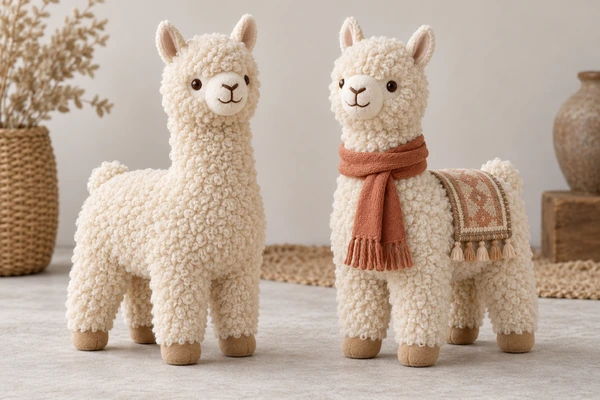
Materials: compare the exact specification
Record fabric references, composition, colors and filling requirements. More materials may increase purchasing and cutting complexity, particularly when each color uses a small quantity. Confirm whether a proposed fabric is readily available or requires separate sourcing. Do not assume two suppliers mean the same material when both write “soft plush.”
Approve physical color references where matching is important. Pantone’s sample guidance explains the limits of screen-based approval. Any environmental description should have supporting evidence; the FTC Green Guides are relevant to reviewing such claims.
Decoration and accessories: identify each operation
Embroidery, printing, appliqué, removable clothing and sewn accessories affect the production plan in different ways. Ask for alternatives that preserve the recognizable character. For example, an embroidered scarf motif and a separate fabric scarf may communicate a similar idea, but they do not create the same product.
Discuss these options during custom development. Keep approved artwork and usage permissions with the brief; WIPO’s licensing discussion provides useful background. Rights clearance and production pricing are separate matters, and both need an owner.
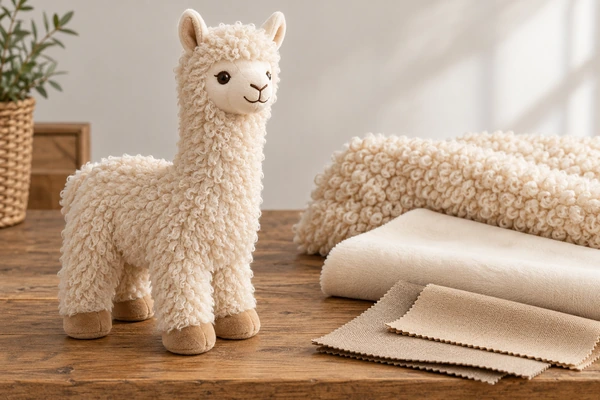
Quantity: separate total volume from variety
Request price breaks for clearly defined quantities and ask what assumptions change at each level. An order split across several sizes, colors and constructions is not necessarily equivalent to the same total quantity of one repeated item. Identify minimums at the design and material level, not just the purchase-order total.
Consider how much stock the retail plan can support. Shopify’s assortment-planning guide provides a framework for evaluating range breadth. A lower unit price is not automatically a better result if the additional inventory is unlikely to sell.
Sampling, testing and packaging: show separate lines
Ask what the sample fee includes, how revisions are handled and whether any credit against a later order is conditional. Record these terms explicitly. Plan the applicable product review with the quality-control process. For US toys, CPSC guidance and certification information help frame the compliance discussion.
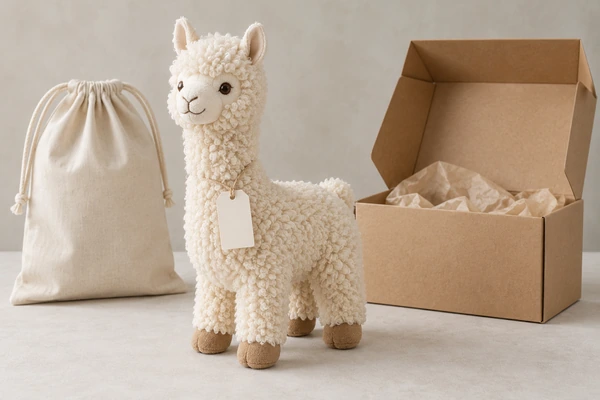
Compare the finished pack, including tags, protective materials, presentation boxes and master cartons. A larger retail box can change transport economics even when the plush itself is unchanged. Discuss appropriate packaging trials using ISTA’s procedure overview.
Build a comparable quotation sheet
Ask for two controlled alternatives rather than several vaguely different quotations. Keep quantity, delivery scope and packaging constant while changing one construction feature. Then repeat the comparison for packaging if it is a major cost driver. This makes the savings attributable to a decision instead of an unknown mix of assumptions.
Record the tradeoff beside the saving. A smaller body might reduce material use but also change perceived gift value. Fewer colors might simplify sourcing while weakening the character’s identity. The buyer should approve these compromises explicitly. A cost reduction is useful when the revised product still does the job required by its sales channel and audience.
| Line | Make the assumption explicit |
|---|---|
| Product | Revision, dimensions, materials and decoration |
| Development | Samples, included revisions and tooling |
| Order | Quantity by design and color |
| Packaging | Unit pack, carton quantity and dimensions |
| Delivery | Rule, named place and excluded charges |
Use ICC Incoterms guidance to clarify delivery responsibilities. Review commercial questions before comparing totals. Keep currencies, quote validity and payment assumptions visible, and distinguish estimated costs from confirmed offers.
Finally, rank possible changes by their effect on the buyer’s objective. Preserve the silhouette if recognition matters most; simplify packing if shelf presentation allows it. Review the supplier’s company information, then request a specification-based quotation. The most useful quote explains what you are buying and what would change the price.
Prepare your quotation comparison inquiry
Copy and complete this brief; mark unresolved items to confirm.
Company / contact:
Product / size / intended use:
Market / quantity / arrival date:
Comparable scope:
Cost breakdown:
Commercial basis:
Email This BriefWhatsApp This Brief
Review and send it yourself, or paste it into our inquiry form.
[…] amount for uncertainty rather than treating every available dollar as purchasing power. The custom plush cost guide helps identify expenses that a simple unit-price comparison […]