Before sending branded mascot artwork to a plush supplier, confirm who may authorize its use, what products and markets the permission covers, and who can approve changes. A supplier’s ability to sew a character does not establish your right to reproduce it. Keep the rights review separate from the technical sample review.
This question set is for licensing and brand teams preparing a production brief. It organizes information for your legal adviser and supplier; it does not determine ownership under every country’s law. Start with the scope of your mascot plush program: merchandise, giveaways, staff gifts or another defined use.
Who controls each part of the mascot?
List the character artwork, name, logo, jersey graphics, slogans and any licensed accessory. Identify the creator or rights holder and the document supporting your intended use. WIPO’s copyright FAQ explains why ownership and permission deserve explicit attention. Payment for a drawing should not be treated as a universal answer to every reproduction or adaptation question.
For commissioned US artwork, the US Copyright Office’s work-made-for-hire guidance describes a specific legal framework. Ask counsel which agreement and jurisdiction govern your project. An invoice, source file and written assignment or license perform different roles; keep the relevant documents together.
Does the permission cover this particular product?
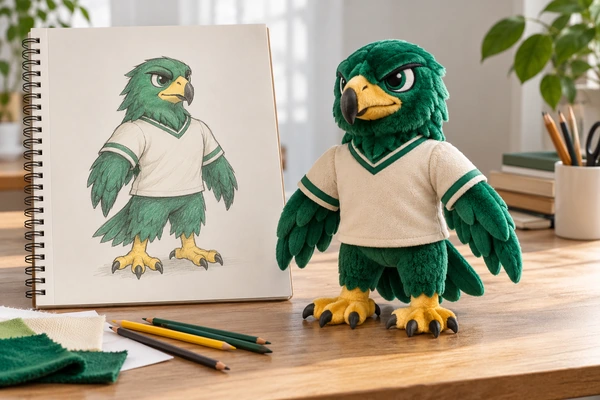
Ask whether the authorization covers three-dimensional plush, promotional distribution, retail sale, online listings and the intended territories. Check dates, quantity restrictions, exclusivity and any approval obligations. WIPO’s licensing discussion provides background on character merchandising. Translate the agreed scope into a short supplier-facing authorization summary without sharing unrelated confidential commercial terms.
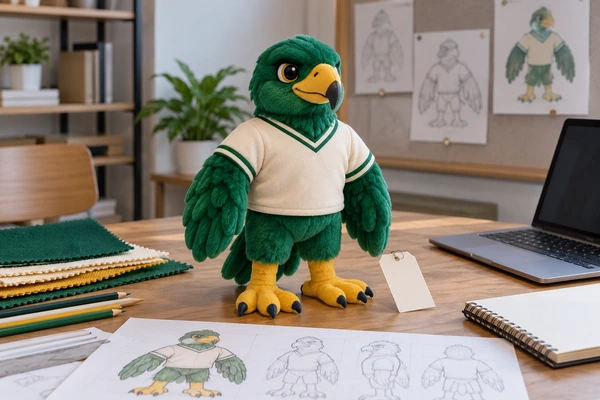
A hypothetical emerald falcon may be approved for a team’s event giveaways while a retailer wants to sell it with a new jersey. Those are separate questions to resolve. Compare existing designs and custom mascots early so the chosen development route fits the permissions available.
What searches and checks are still outstanding?
A character name and its artwork can raise different issues. Review WIPO’s trademark overview with the responsible adviser. The Global Brand Database can support research, but WIPO notes that national or regional registers may also need checking. A search with no obvious result is not a guarantee of clearance.
Keep the search owner and unresolved questions in the brief. Do not ask the factory to replace legal clearance with a statement that a design “looks original.” Assess the supplier’s actual production role using our manufacturer selection guide.
Who may change the artwork during sampling?
Plush construction can require thicker outlines, revised proportions or simplified clothing. Define which changes a supplier may propose, who approves them and which features are fixed. Our design brief checklist helps connect those instructions with technical details. Require approval of the assembled sample, including labels and packaging artwork.
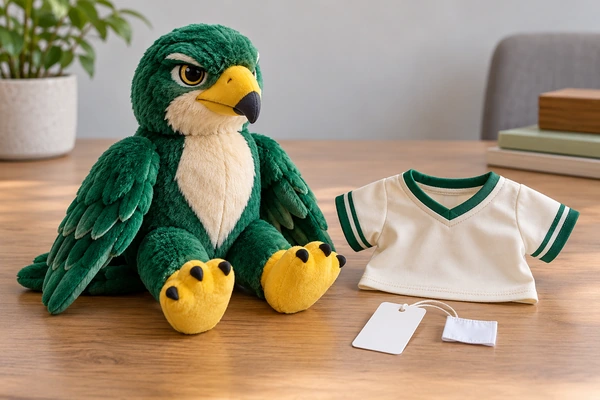
For branding, show placement and permitted clear space rather than saying “add our logo.” Review logo placement options before requesting a proof. If a distinctive product appearance is also important, discuss the relevance of industrial design protection with counsel before public disclosure.
What may the supplier share or retain?
State whether prototypes or photos may appear in catalogs, trade shows, portfolios or social posts. Address access by subcontractors, permitted file use, surplus samples and handling at project end. WIPO’s trade-secret overview distinguishes confidential information from ordinary public material. Do not assume every delivered file automatically qualifies for the same protection.
The WIPO guide to confidential-information management supports a practical discussion of permitted use and access. Ask your adviser to tailor the agreement. Operationally, send only the files needed for the current development stage and name the recipient responsible for controlling them.
What happens at reorder or license expiry?
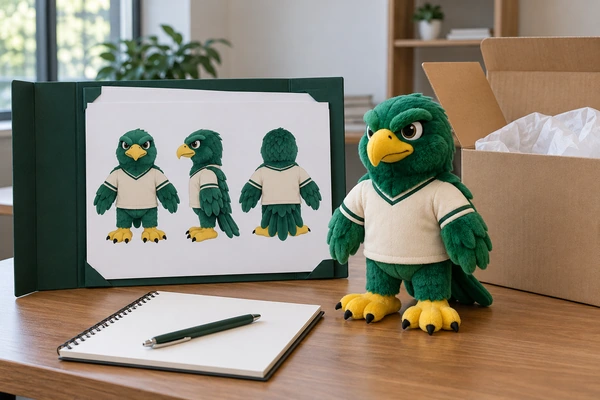
Build an internal handoff sheet with four owners: the person confirming rights, the person approving the character, the person accepting product quality and the person releasing the order. One individual may cover several roles, but the decisions should remain identifiable. For the falcon example, approval of the jersey color must not be mistaken for permission to use a sponsor’s emblem.
Also identify who can authorize product photography after sampling. A factory may need reference images for production while the brand still prohibits public promotion before launch. Recording those two uses separately reduces ambiguity without delaying necessary technical communication.
Record the permitted production window, approval version and the person responsible for checking renewals. A retained physical sample establishes appearance; it does not extend an expired license. Our reorder consistency guide can help manage the technical side alongside the rights record.
Before releasing production, close the remaining questions in one written register: permission confirmed, approved artwork identified, sample accepted and publication restrictions understood. Keep unresolved rights matters off the production-release list. Once your scope is clear, send the approved project brief for a manufacturing discussion.
Your rights and approvals record
| Confirm | Record with your specification |
|---|---|
| Permission scope | Approved characters, products, territories, channels and dates |
| Approval ownership | Named approver and controlled artwork revision |
| Records | Written permissions, change decisions and production records to retain |
Prepare your rights and approvals inquiry
Copy and complete this brief; mark unresolved items to confirm.
Company / contact:
Product / size / intended use:
Market / quantity / arrival date:
Permission scope:
Approval ownership:
Records:
Email This BriefWhatsApp This Brief
Review and send it yourself, or paste it into our inquiry form.