A sports team’s brand guidelines become a useful mascot plush brief only when visual rules are translated into measurable product decisions. The supplier needs more than a logo file: it needs the character’s essential proportions, approved colors, uniform layout, permitted adaptations and approval route. Start by distinguishing the mascot’s identity from details that can change to suit sewn construction.
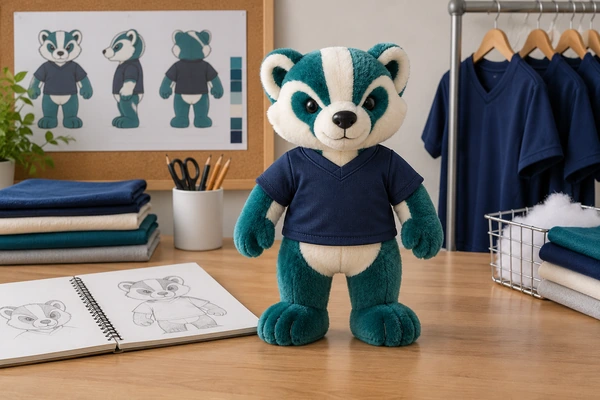
This guide follows an illustrative badger mascot wearing a plain sports jersey. The same method applies to other original team characters. Use the character design brief checklist to assemble the starting information, then translate each brand rule into a production instruction.
Translate ownership into an approval map
Identify who controls the mascot artwork, team name, crest, sponsor marks and uniform graphics. The rights may not all sit with the same organization. Ask the team’s authorized representative to confirm the permitted merchandise, territories, channels and production quantities or other license limits. WIPO’s trademark guidance and its copyright FAQ provide useful background for this review.
List each approver and the material they must receive. A marketing team’s visual approval may not replace a licensor’s required approval. If ownership is unclear, resolve it with appropriate professional advice before the supplier uses the artwork. Do not assume a public team image is available for commercial reproduction.
Translate character identity into protected features
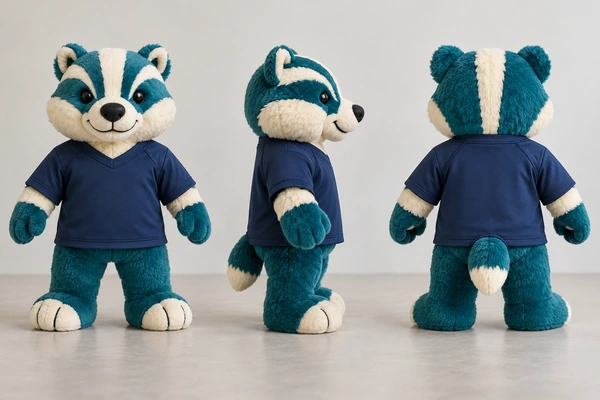
Mark the features that make the mascot recognizable: muzzle shape, brow angle, ear size, eye spacing, stripe pattern and body pose. Supply coordinated front, side and back views. Explain which expressions are acceptable and which would change the character’s personality. Review the likely changes in moving from artwork to plush before the first sample is cut.
For a smaller version, decide which details may be simplified and which must remain. A line visible on a screen may disappear in pile or embroidery. The character size consistency guide helps define a family of products without expecting identical construction at every scale.
Translate team colors into material references
Record the exact color system and approved physical references for body fabric, jersey, thread and printed graphics. Pantone’s system overview distinguishes references used for different applications. Do not treat a screen RGB value as a complete textile approval.
Review the assembled mascot under agreed lighting. Fabric, embroidery thread and printed ink can behave differently even when their nominal references appear close. X-Rite’s explanation of metamerism describes why lighting matters. Record accepted differences and retain the physical reference so a later reorder does not begin from an old photograph.
Translate jersey artwork into placement instructions
| Brand element | Production instruction |
|---|---|
| Team crest | Approved artwork, method, dimensions and position |
| Player number | Exact character, font rights and placement |
| Sponsor mark | Permission, approved version and required clearance |
| Uniform trim | Material, color and seam treatment |
Show placement from a defined seam or panel edge rather than saying “centered.” Consider how the jersey curves over the stuffed body and whether arms obscure the artwork. Compare decoration methods in the logo placement guide, and specify whether the jersey is removable using the clothing production checklist.
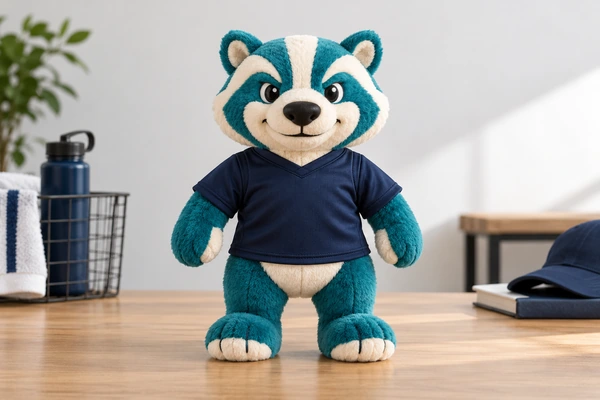
Supply editable artwork where appropriate, with linked assets and font permissions addressed. Adobe’s packaging instructions help organize the handoff. Keep sponsor and player variants in separate, clearly named files; a supplier should not infer which logo version is current from a crowded folder.
Give the sample reviewers a common decision sheet
Place the approved illustration beside front, side and back photographs of the sample. Ask reviewers to mark each protected feature as accepted or requiring correction, and to explain the requested change in one sentence. This makes a comment such as “the face feels wrong” actionable without encouraging the factory to redesign unrelated features.
Separate creative changes from production corrections. Moving an eye to match approved artwork is different from introducing a new expression after sampling. Record the effect of new requests on cost and timing before accepting them, especially when several team departments share approval responsibility.
Translate the launch into a controlled release
Identify whether the mascot is intended as a toy and which markets will receive it. Discuss applicable requirements with reference to CPSC toy guidance or the EU toy safety framework, as relevant. Branding approval does not establish product safety.
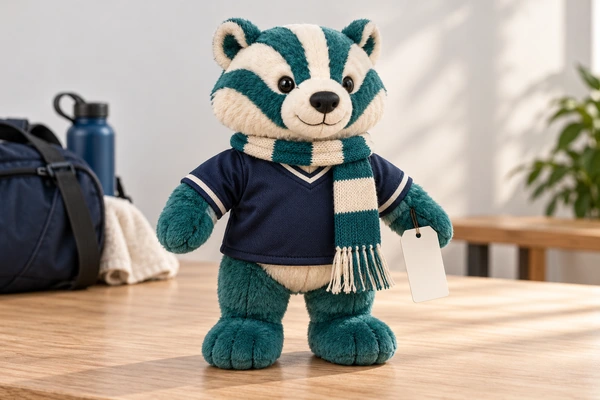
Schedule review dates backward from the match, tournament or retail launch using the fixed-date event planning guide. Consolidate feedback into one revision list and identify which changes need renewed licensor review. ISO’s configuration management guidance provides a useful model for recording approved versions.
Before release, retain the signed sample, artwork revision, material references and packaging instructions. Include reorder rights and the handling of expired sponsor artwork in the mascot reorder plan. This gives the supplier a practical route from brand rules to a repeatable product.
Prepare your branded plush planning inquiry
Copy and complete this brief; mark unresolved items to confirm.
Company / contact:
Product / size / intended use:
Market / quantity / arrival date:
Audience and purpose:
Brand approval:
Distribution:
Email This BriefWhatsApp This Brief
Review and send it yourself, or paste it into our inquiry form.