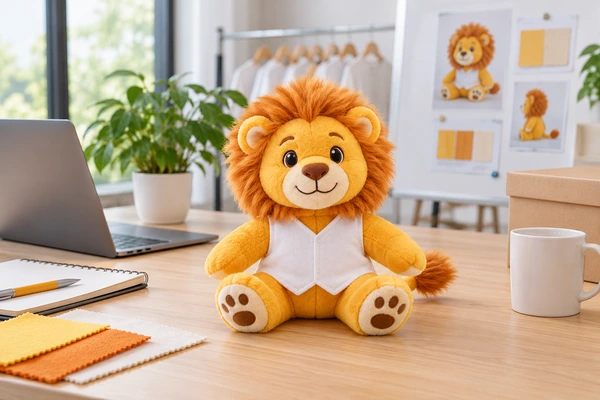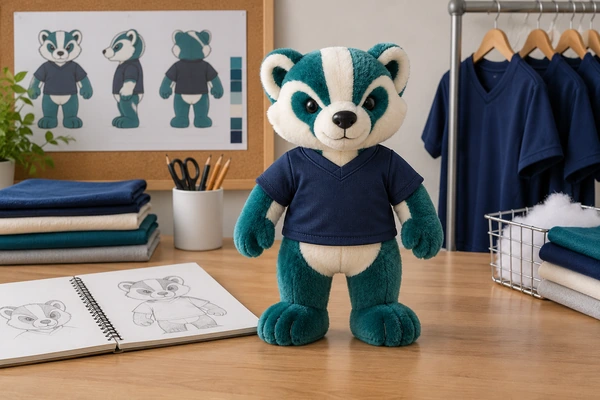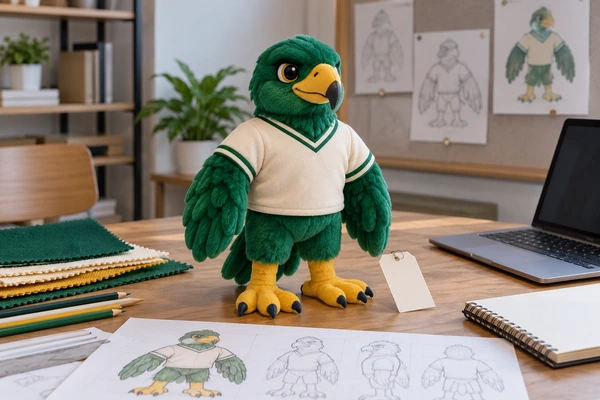
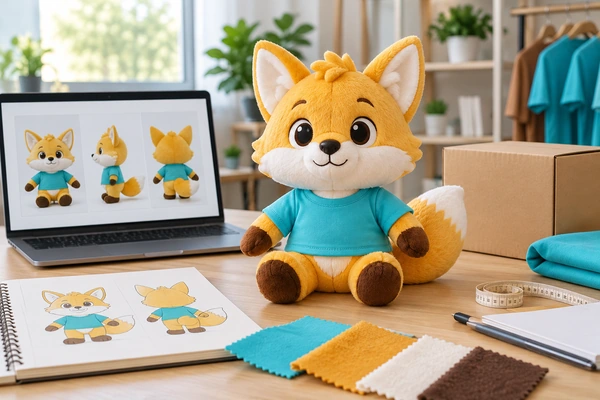
A promotional mascot plush supplier should be evaluated on evidence that it can reproduce your character, control approved changes and meet the campaign’s delivery needs. A large photo gallery or an attractive unit price does not demonstrate those abilities. Use a short, weighted scorecard supported by samples and records.
For a brand procurement lead, the decision has two parts: mandatory requirements that every candidate must meet, followed by comparative strengths. Keep those parts separate. An excellent presentation cannot compensate for unresolved artwork permission or an unsuitable product specification.
Set the gates before assigning points
Describe the audience, markets, quantity, distribution channel and required arrival date. Clarify whether you need an original character, an adaptation or an existing product with branding. The comparison between existing designs and custom mascots helps define the scope before supplier selection.
Ask each candidate to confirm which entity contracts, manufactures and coordinates subcontracted work. Where management-system certification is claimed, check its holder, site, scope and validity. ISO’s certification guidance explains verification routes; ISO 9001 concerns a quality management system, not automatic approval of your finished mascot.
Build an evidence-weighted scorecard
The weights below are an illustrative starting point for a campaign with a recognizable character. Adjust them before reviewing quotations so the preferred supplier does not determine the criteria. Score each row from zero to five and record the evidence behind the number.
| Area | Example weight | Evidence to request |
|---|---|---|
| Character translation | 30% | Relevant sample and explanation of difficult features |
| Construction control | 25% | Inspection records and component specifications |
| Delivery planning | 20% | Milestone plan with dependencies |
| Communication | 15% | Clear response to one controlled revision |
| Commercial clarity | 10% | Itemized quotation and exclusions |
A zero means no usable evidence; three means an acceptable documented response; five means strong, directly relevant evidence. These are buyer-defined scoring rules, not an industry certification scheme. Keep unresolved mandatory requirements outside the weighted total and record them as open gates.
Test the character translation, not just softness
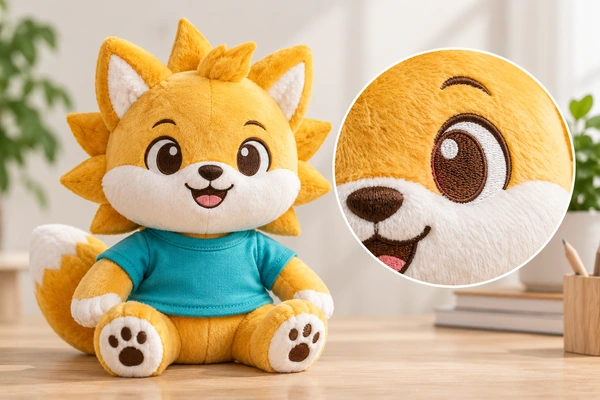
Give candidates the same artwork and identify the features that make the mascot recognizable. Ask how the muzzle, eye spacing, costume and posture will change in three dimensions. Compare samples at the intended finished size. The mascot manufacturer selection guide provides a starting checklist for this discussion.
Ask for a physical color approval method rather than accepting a phone photograph. Pantone’s textile evaluation guidance can inform the viewing process. Use your agreed material and lighting conditions when judging bulk consistency; a color name by itself is insufficient.
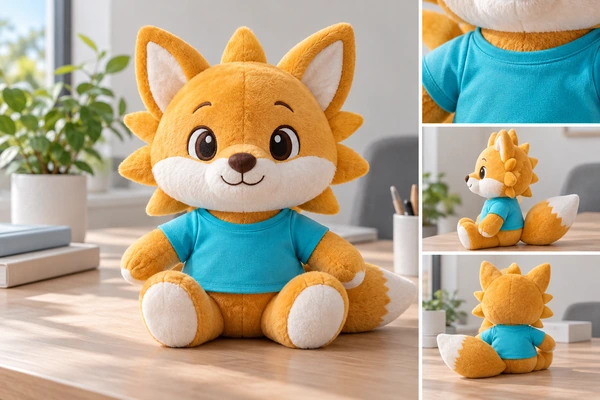
Have marketing review the face and logo placement while product staff review seams and attachments. A shirt can conceal a seam or distort the logo when stuffed. Discuss branding placement on the actual sample, including the angles visible in campaign photography.
Ask for records that match the proposed product
Request the proposed materials, component suppliers, inspection checkpoints and approach to nonconforming units. For U.S. toys, begin the requirements discussion with CPSC business guidance. Where third-party testing is required, verify the relevant laboratory and scope through the CPSC laboratory directory. A report for a different design is background evidence, not proof for this order.
Confirm who can use the artwork and who authorizes production changes. WIPO’s licensing explanation helps frame that discussion. Request a dated approval log and retained reference sample; ISO 10007 guidance is a useful reference for managing a product’s approved configuration.
Run one controlled communication exercise
Send a small revision request with an annotated image and a clear question. Evaluate whether the supplier repeats the requested change accurately, identifies cost or timing effects, and separates confirmed facts from assumptions. Fast replies are valuable only when they reduce uncertainty. Keep the exercise proportionate and avoid repeatedly changing the design during evaluation.
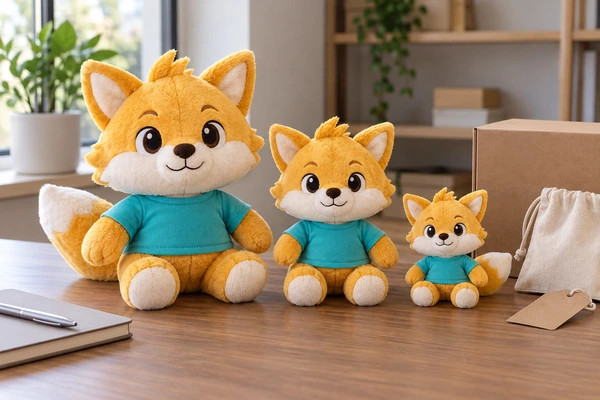
Choose with the campaign and reorder in view
Consider two hypothetical candidates. One submits a polished sample but cannot explain how the face position will be checked during production. The other provides a less elaborate presentation, a marked reference sample and a clear correction process. Record the first candidate’s missing control evidence instead of assuming visual polish means repeatability. If a gap can be resolved, request one specific document or demonstration and rescore that row. Keep the original score and the reason for the change so another team member can follow the decision.
Compare the same delivery basis using ICC Incoterms guidance, and clarify what happens when an approval arrives late. Review the fixed-launch planning steps against your event calendar. Retain the scorecard, quotation and approved sample together.
Finally, ask how future orders will preserve fabric, color and decoration references. Our mascot reorder guide explains the records worth retaining. Explore relevant promotional plush formats and share your evaluation brief once the mandatory requirements and decision criteria are clear.
Prepare your branded plush planning inquiry
Copy and complete this brief; mark unresolved items to confirm.
Company / contact:
Product / size / intended use:
Market / quantity / arrival date:
Audience and purpose:
Brand approval:
Distribution:
Email This BriefWhatsApp This Brief
Review and send it yourself, or paste it into our inquiry form.