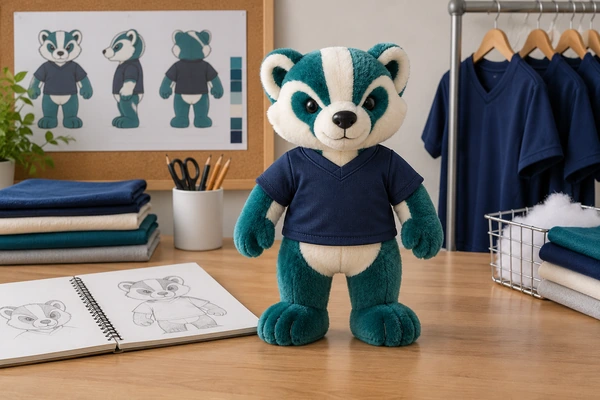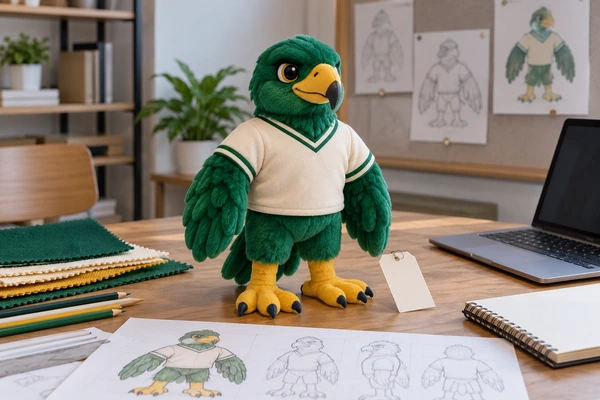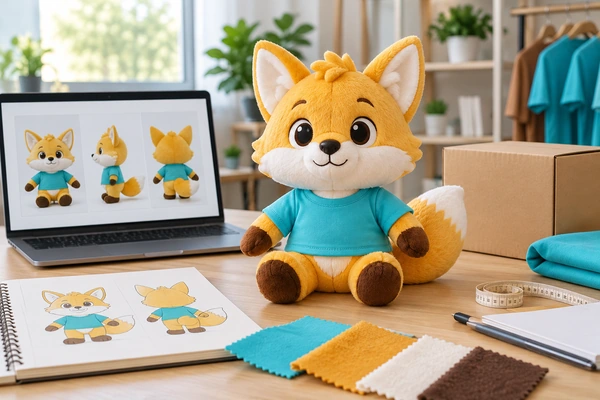
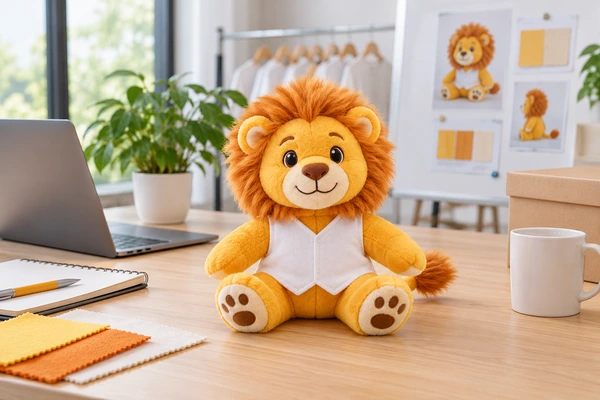
Promotional plush for trade shows works best when the product is recognizable, easy for visitors to carry and affordable within the complete event budget. Increasing size can improve visibility while increasing carton volume and carrying difficulty. Adding packaging can improve presentation while creating more handling and waste. Decide which constraint matters most before choosing the format.
For an event marketer, begin with the audience and handoff moment. Is the plush a thank-you after a qualified conversation, a scheduled-meeting gift or an openly available booth giveaway? Those uses imply different quantities and presentation. Compare the available promotional plush formats against that specific purpose.
Constraint one: will the brand be recognized?
A recognizable mascot can communicate more effectively than a large logo placed on an unrelated toy. If the character itself is unfamiliar, decide how the product and its card will explain the connection. Our comparison of existing designs and custom mascots helps frame the development choice.
Use a physical sample to check whether the logo remains visible when the plush is held naturally, placed on a desk or packed for handout. A mango-colored lion with a white vest offers a clear branding area, but its mane or arms may obscure parts of the design. Review placement options before approving the decoration.
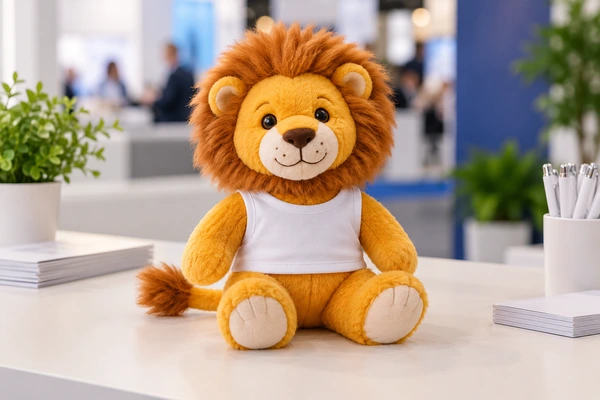
Confirm the rights to reproduce and adapt the mascot using the project’s actual permissions; WIPO’s copyright FAQ provides background. For brand colors, supply an appropriate physical reference and review Pantone’s textile guidance. A photo of a logo on a screen is an incomplete approval standard.
Constraint two: can the visitor take it home?
Consider the visitor’s day, not only the booth display. Attendees may carry a laptop, printed materials and other gifts, then travel by train or plane. Test whether the packed plush fits the bag you expect them to use. Record both the toy’s finished dimensions and its packed dimensions.
Use one measurement system in the brief and check conversions with the NIST reference. Do not rely on the label “small.” Two products of the same height can occupy different space because of tails, ears, posture or packaging.
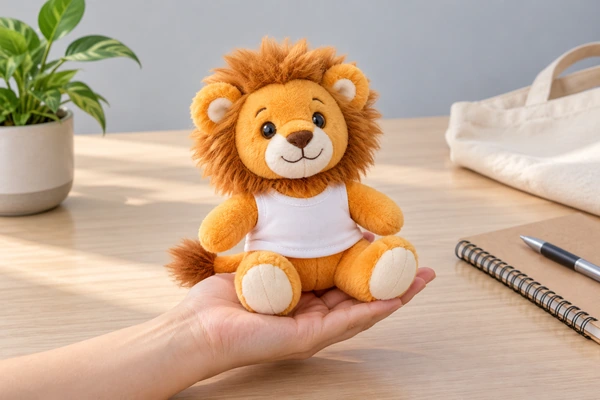
Run a simple handling review with the actual sample and proposed bag. Check whether the plush snags on the opening, loses its intended shape or leaves the branding hidden. If compression is proposed, assess recovery before accepting it as a space-saving solution. Keep observations separate from formal product-safety testing.
Constraint three: what does each useful handout cost?
Build the budget from development, samples, production, branding, packaging, freight, event handling and any leftover-stock arrangements. Review our size and packaging budget guide alongside the main cost drivers. Compare offers on the same defined scope.
| Option | Potential benefit | Question to test |
|---|---|---|
| Compact mascot | Easier carrying and storage | Does the face and branding remain legible? |
| Larger display gift | Greater visual presence | Can selected recipients transport it easily? |
| Protective sleeve | Simple handling | Does it protect the intended shape? |
| Presentation box | More formal gifting | Is the added volume justified? |
As a hypothetical comparison, a team might reserve a larger boxed mascot for booked meetings and offer a compact version after broader booth conversations. That is a distribution choice, not evidence that one size produces better results. Check whether the added SKU creates extra development, sorting and stock-control work before adopting the split.
Make the delivery plan specific to the event
Consult the current event manual for receiving dates and handling rules. Freeman’s exhibitor guide explains the distinction between shipping and material handling. Confirm the named delivery point and commercial responsibilities with reference to ICC Incoterms guidance. Use the fixed-launch planning checklist to work backward from the required arrival.
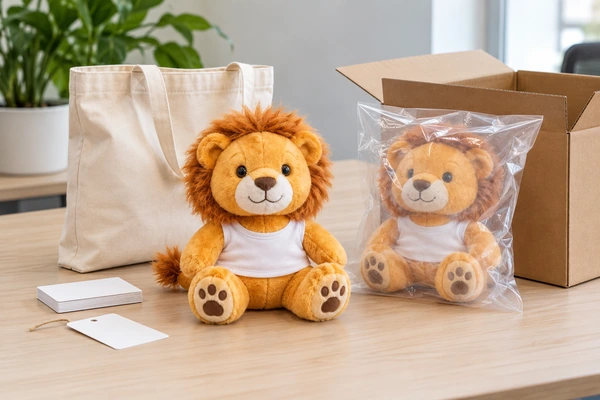
Discuss transport protection with reference to relevant ISTA procedures. Also assess intended users and applicable product requirements through resources such as CPSC toy guidance; promotional distribution does not eliminate that assessment.
Define success before ordering
Write a handout rule that booth staff can apply consistently. Specify which interaction qualifies, where reserve stock is kept and who records daily distribution. Leave a defined quantity for scheduled meetings rather than discovering halfway through the show that all units have gone. Plan the destination of unused stock before selecting dated packaging or event-specific artwork.
After the event, compare actual distribution with the forecast and review whether carrying or packaging caused complaints. Record observations from staff separately from measured outcomes. These findings can inform a reorder without claiming that the plush caused every later inquiry or purchase.
Count distributed units separately from qualified conversations, follow-up requests and later outcomes. If a card links to campaign content, use Google’s campaign-URL guidance to distinguish traffic, while recognizing that a scan alone does not establish a sale. Share the event purpose, audience and budget scope with Shinegifts to develop an appropriate product brief.
Prepare your quotation comparison inquiry
Copy and complete this brief; mark unresolved items to confirm.
Company / contact:
Product / size / intended use:
Market / quantity / arrival date:
Comparable scope:
Cost breakdown:
Commercial basis:
Email This BriefWhatsApp This Brief
Review and send it yourself, or paste it into our inquiry form.