
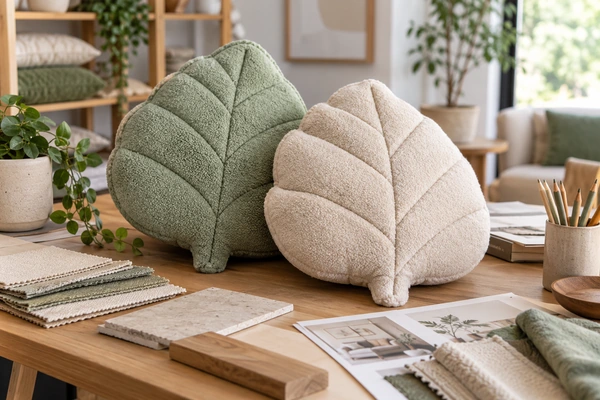
A hotel buyer and a homeware retailer can choose the same attractive plush cushion for very different reasons. The hotel needs a repeatable room accessory that fits housekeeping routines. The retailer needs a product that customers understand, display well and take home easily. Start with the use case, then choose shape, fabric and filling together.
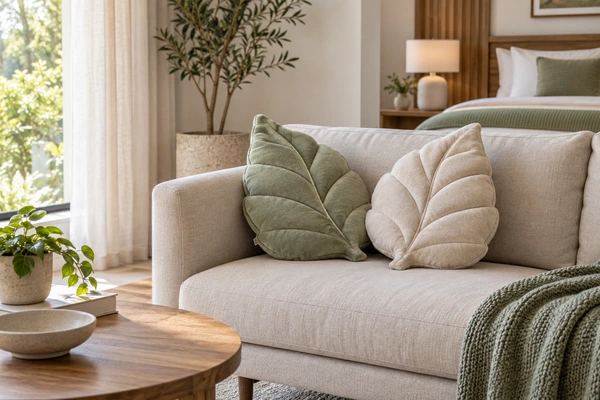
Consider an illustrative leaf-shaped cushion in sage and oatmeal. Its outline may suit both a lounge and a gift shelf, but the required cover construction, care information and packaging can differ. Explore plush pillow and cushion formats with those operating differences in mind.
Scenario A: the hospitality buyer
Begin with the room, furniture and cleaning process. Measure the seat or bed area where the cushion will appear, including clearance needed for normal use. Ask housekeeping who removes it, where it is stored and how it is cleaned. A decorative cushion that looks impressive in a staged photograph may be awkward to handle between guests.
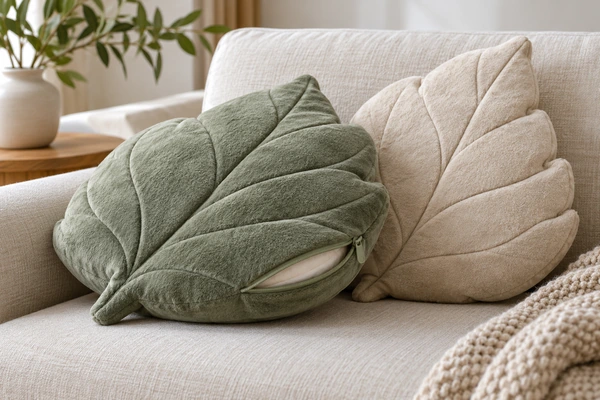
Prioritize repeatable dimensions, practical cover access and documented care. If staff will remove the cover, test the opening with the actual insert. Use the removable-cover design guide to check zipper placement, seam access and reassembly. Do not assume a removable cover is automatically suitable for the hotel’s laundry process.
ISO 6330 addresses domestic washing and drying procedures. It should not be presented as proof of suitability for every commercial laundry cycle. Give the supplier the intended cleaning method and ask for an evaluation that represents it. Record shrinkage, color change, pile appearance and the ease of putting the insert back inside.
Scenario B: the homeware retailer
The retailer starts with shelf space, customer expectations and the collection’s price architecture. Compare a simple square, a sculpted shape and a character cushion using the same display footprint. A novel outline may attract attention, while a familiar shape can be easier to combine with existing room accessories. Neither is automatically the better commercial choice.
Ask what the customer receives: a filled cushion, a cover only or a coordinated set. Make that distinction obvious on the package and product page. Plan separate variants and identification using GS1’s barcode guidance. Buyers should not need to infer contents from a lifestyle image.
For U.S. retail, assess relevant fiber and origin disclosures using the FTC textile labeling guide. Prepare care instructions appropriate to the actual article; ISO 3758 is a reference for textile care symbols. A care symbol set must reflect supported treatment limits, not simply match another brand’s label.
Where both buyers should use the same comparison
| Question | Hospitality emphasis | Homeware emphasis |
|---|---|---|
| Does the shape fit? | Furniture, handling and storage | Shelf footprint and room styling |
| Can it be maintained? | Repeated operational cleaning | Clear consumer care instructions |
| Will it stay presentable? | Wear in the intended setting | Customer handling and normal use |
| Can it be replenished? | Consistent room appearance | Manageable variants and reorders |
Compare physical samples side by side. Record finished dimensions, filling weight, loft and feel separately. Our fabric and filling guide helps describe options, while the size and shape specification guide helps remove measurement ambiguity. A heavier cushion is not necessarily more comfortable or more stable.
Choose evidence that answers the actual concern
If rubbing against light upholstery is a concern, discuss a suitable color-transfer evaluation; AATCC’s method directory includes crocking methods. If surface wear matters, identify a relevant method from ASTM’s textile standards. Ask the laboratory to explain method limits and agree acceptance criteria rather than treating an isolated test number as universal.
For coordinated colors, agree a physical reference and viewing conditions. Pantone’s textile guidance provides useful context. Examine the sample with the intended furniture or neighboring products, since pile direction and surrounding colors can change the visual impression.
Approve the packed product, too
Run a small operational trial before selecting the final style. In a hotel, ask staff to remove, clean, dry and replace the cover using the intended routine, then record problems at each step. In a shop, place the packed cushion in the planned display and have staff perform a normal receiving and checkout process. Note handling time, space used and unclear customer information. These observations do not replace laboratory evidence, but they reveal practical mismatches that a fabric swatch or studio photograph cannot show.
Ask for a sample in the proposed shipping pack. Record unpacking instructions and the time allowed before evaluating shape. Discuss appropriate distribution testing with reference to ISTA procedures, and compare compression recovery when that packing method is proposed.
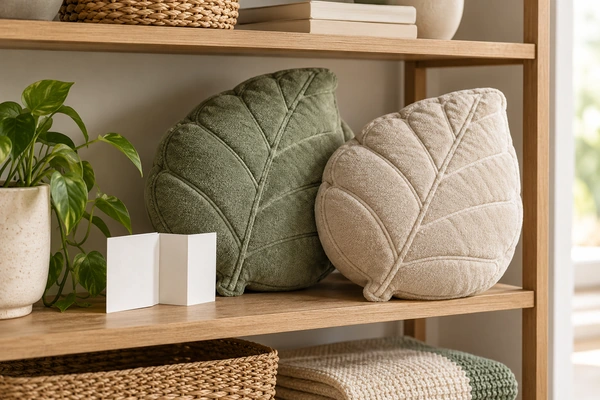
Finally, compare supplier quotations beyond unit price, including replacement covers, packing and replenishment assumptions. Submit a cushion brief that names the actual environment and care process. The right style is the one that works after the photograph, through receiving, use, cleaning and replacement.
Prepare your cushion specifications inquiry
Copy and complete this brief; mark unresolved items to confirm.
Company / contact:
Product / size / intended use:
Market / quantity / arrival date:
Finished dimensions:
Construction:
Use and care:
Email This BriefWhatsApp This Brief
Review and send it yourself, or paste it into our inquiry form.


