

A removable plush pillow cover can make cleaning more convenient, but only if it is easy to remove, survives the intended care process and fits the insert afterward. Specify the cover, closure and inner cushion as a system. “Removable” describes access; it does not prove that either component is machine washable.
For a sage quilted rectangle in a plush pillow range, the important questions begin at the opening and continue through washing, drying and refitting. Use the answers below to prepare a practical buyer specification.
How large should the opening be?
Large enough to remove and replace the intended insert without excessive force. Do not specify zipper length from appearance alone. A firm inner cushion, curved corners or a thick quilted cover can make a short opening difficult to use. Ask the supplier to demonstrate removal and refitting with a fully assembled sample.
Record where the opening begins and ends, which seam contains it and how the closure is concealed. Include access requirements in your customization brief. The YKK zipper usage manual provides useful handling context, but the chosen zipper still needs to be evaluated in your pillow construction.
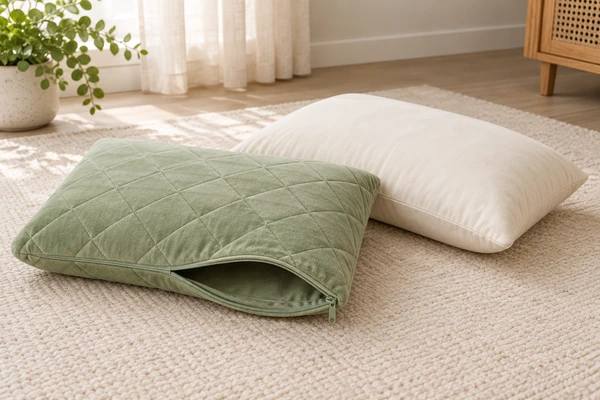
What should the inner cushion contain?
Define the insert shell, filling type, fill quantity and finished dimensions separately from the cover. A removable outer layer should not expose loose filling during normal removal. Check the insert’s seam closure and labeling, and clarify whether replacements will be sold separately. Matching nominal dimensions alone may not produce the desired fullness.
Ask for the complete material list, including quilting layers, embroidery and zipper tape. If a material certification is claimed, verify its scope and validity. OEKO-TEX STANDARD 100 information can help frame that discussion; a certificate for one fabric does not automatically cover every component or finished-product claim.
How do seams affect comfort and appearance?
Turn the cover inside out during review. Look for consistent seam allowances, secured ends and construction that does not obstruct the zipper. Then refit it and check whether corners fill evenly. A cover can be neatly sewn yet fit poorly because the insert and cover were approved independently.
Discuss the assembly sequence through the manufacturing review. The Coats soft and secure seams guide is a useful technical reference for sewing considerations. Agree on observable acceptance criteria instead of relying on a general promise of strong stitching.
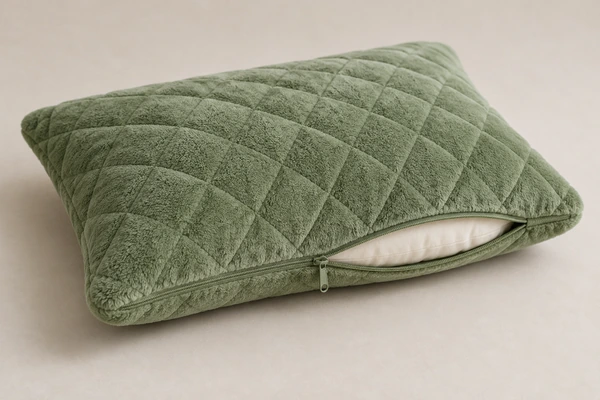
What evidence supports the care instructions?
Request an evaluation using the proposed care conditions on the actual cover, including its decoration and closure. Record the washing procedure, drying method and number of cycles. ISO 6330 specifies domestic washing and drying procedures for textile testing; it does not itself establish that your pillow has passed a particular requirement.
Compare dimensions, color, surface appearance and zipper operation before and after the agreed procedure. Measure the cover in a consistent state, then check fit on the original insert. Set acceptable changes before testing. If the cover becomes difficult to close or the quilting twists, revise the construction or care claim rather than ignoring the result.
Use ISO 3758 as a reference for care symbols where appropriate, and review applicable local labeling rules. The FTC textile labeling guide helps US buyers identify relevant questions about textile information and exemptions. Avoid copying a label from a different product category.
What should the customer see on the label?
Clearly distinguish instructions for the removable cover from instructions for the insert. State the component to which each instruction applies. Confirm where labels remain visible after packaging is removed and whether users can identify them during cleaning. Avoid ambiguous statements such as “washable pillow” if only the outer cover has supporting evidence.
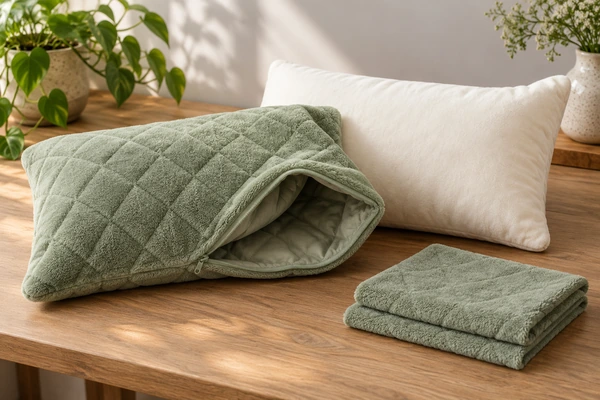
How should the final approval be recorded?
Ask someone unfamiliar with the sample to remove and replace the cover using only the proposed instructions. Observe where they hesitate, whether the insert catches and whether the corners need unusual manipulation. This is a usability check, not a durability test, but it can reveal problems that a practiced sample maker overlooks.
If you plan replacement covers, define compatible insert versions and keep those dimensions stable. Give spare covers their own identification so warehouse staff do not mix visually similar sizes. Record whether the quoted package includes both components or the cover alone.
Approve one complete system, with a record of dimensions, materials, closure details and care evidence. Add removal, refitting and post-care appearance to the quality-control plan. Use revision control consistent with the principles in ISO 10007 so a replacement insert or fabric change triggers review.
Record packaged dimensions separately, using the GS1 measurement standard as a data reference. Consult the buyer FAQ and company introduction, then send your cover-and-insert specification with the intended market and use.
Images illustrate a proposed removable-cover design. They do not demonstrate wash performance or certified construction.
Your cover and closure design record
| Confirm | Record with your specification |
|---|---|
| Opening layout | Closure position, usable opening and insert access |
| Fit | Cover dimensions, overlap or closure length and seam clearance |
| Use check | Opening, removal, refitting and agreed care procedure |
Prepare your cover and closure design inquiry
Copy and complete this brief; mark unresolved items to confirm.
Company / contact:
Product / size / intended use:
Market / quantity / arrival date:
Opening layout:
Fit:
Use check:
Email This BriefWhatsApp This Brief
Review and send it yourself, or paste it into our inquiry form.


[…] Review an assembled sample in its intended shape. A lightly filled shell can show folds differently from the agreed full profile. Use your size and shape specification so the color review does not drift with construction. If the cover is removable, evaluate the cover and insert arrangement described in the cover design and care brief. […]