
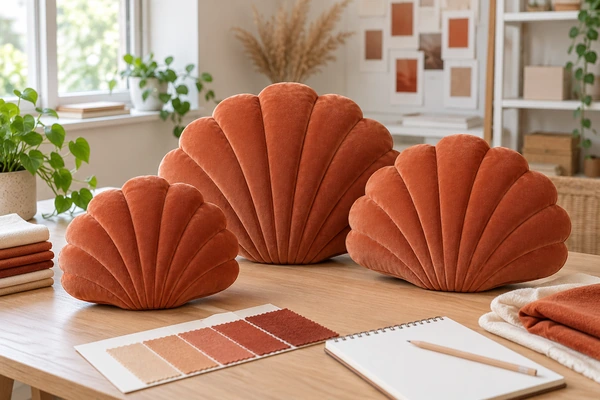
Plush cushion color matching works best when the buyer approves a physical fabric reference, defines viewing conditions and checks production lots against the same reference. A screen image can communicate a direction, but it cannot settle differences caused by pile, lighting or surface finish. The objective is a repeatable approval method that both parties can use.
For a hospitality collection, a terracotta cushion may sit beside upholstery, curtains and printed packaging. Those materials will not necessarily look identical under every lamp. Start with the intended room and the decisions described in our plush pillow fabric selection guide, then use this protocol.
Establish one controlled reference
Choose the approved fabric swatch and record its supplier, material code, color reference, date and face side. Keep protected duplicates with the buyer and manufacturer. If a Pantone reference is used, identify the exact system and edition; Pantone’s system explanation helps distinguish references intended for different materials. A number without its system can create ambiguity.
A sample made from another fabric is a directional target until the intended plush is approved. Ask whether dyeing, printing or a stock shade will deliver the final color. Pantone’s synthetic textile guidance illustrates why physical standards and controlled evaluation matter. Keep reference changes in the same record as your fabric specification.

Standardize the comparison before judging it
| Control | Agreement to record |
|---|---|
| Lighting | Primary evaluation light and secondary use environment |
| Orientation | Pile direction, face side and viewing angle |
| Condition | Clean, relaxed material with consistent brushing |
| Reference | Signed swatch code and revision |
| Decision | Named approver and acceptance method |
Compare the samples side by side against a neutral background. Turn both together rather than rotating only the submitted swatch. Pile direction can make an unchanged textile appear lighter or darker; X-Rite’s discussion of geometric metamerism explains this viewing effect. Examine the finished cushion as well, because curved panels and seams present the pile at different angles.
Check the agreed primary light and representative retail or guest-room lighting. Two materials that match under one source can separate under another, a phenomenon explained in X-Rite’s metamerism guide. Record the observed difference instead of saying merely “too orange.” Photographs help document its location, but camera processing adds another variable; ICC display calibration information also shows why screen conditions belong in the discussion.
Approve construction and shade together
Review an assembled sample in its intended shape. A lightly filled shell can show folds differently from the agreed full profile. Use your size and shape specification so the color review does not drift with construction. If the cover is removable, evaluate the cover and insert arrangement described in the cover design and care brief.
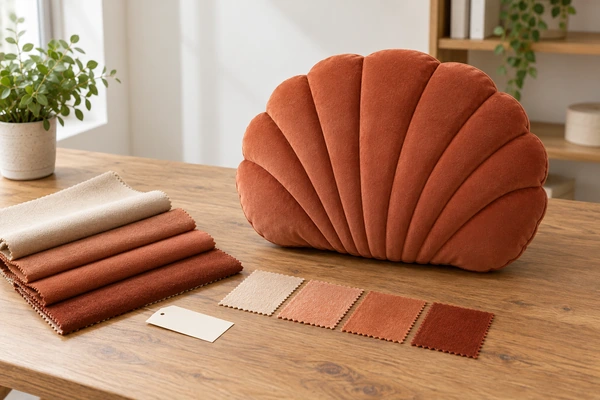
Where instrumental measurement is appropriate, agree the instrument setup, measurement locations, backing, repeat readings and tolerance with the textile specialist. A universal numerical tolerance is unsuitable for every pile and finish. Datacolor’s color management guidance provides useful questions for that conversation. Keep visual judgment and measurement records together, and specify how disagreements will be resolved.
Connect bulk material to the approved sample
Require lot identifiers on submitted production swatches and maintain the connection from incoming fabric to finished cartons. Ask what happens if several dye lots are necessary. For cushions sold as a coordinated set, mixing noticeably different lots within one pack may matter more than a small shift across separate orders. Add this check to the bulk cushion quality checklist.
Reserve retained swatches and finished samples for later comparison. Datacolor’s textile workflow discussion supports communicating color consistently across stages. Your purchase documents should identify who can release a lot and whether a substitute material requires fresh approval.
What should a useful correction request say?
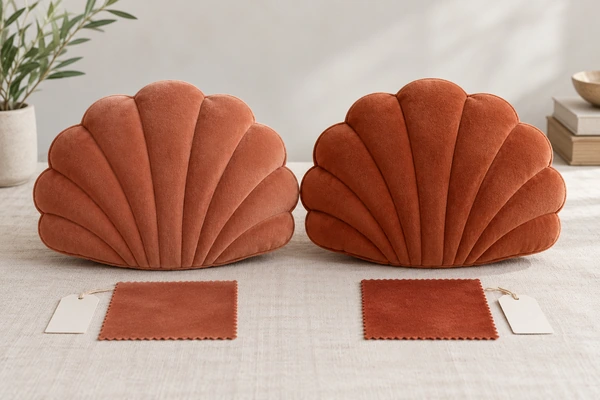
Describe the sample code, comparison reference, viewing setup and affected panel. For example, a buyer might report that the submitted shell looks redder than the signed swatch under the agreed showroom light, while the backing matches acceptably. This is an illustrative observation, not a measured tolerance. Ask the supplier to identify the likely cause and submit a revised sample with its own code.
Keep rejected versions until the decision is closed. Do not allow a newer photograph to silently replace the physical standard. If the team accepts a compromise, document whether that acceptance applies to this production lot only or also changes the master reference for future reorders.
Close the loop before shipment
Inspect packed production samples after the agreed unpacking and recovery process. Use the shape recovery review to distinguish temporary pile disturbance from an actual shade problem. If appearance after cleaning is part of the requirement, agree an appropriate test with the laboratory; AATCC’s standards resources help frame the testing discussion. Submit the final reference, lighting notes and acceptance record with your cushion project inquiry.
Prepare your color approval inquiry
Copy and complete this brief; mark unresolved items to confirm.
Company / contact:
Product / size / intended use:
Market / quantity / arrival date:
Physical reference:
Component relationship:
Approval conditions:
Email This BriefWhatsApp This Brief
Review and send it yourself, or paste it into our inquiry form.


