

A Christmas plush assortment should give each format a clear shopping role: a main gift, a small add-on or a decorative hanging item. Coordinate the visual story, but plan toy plush and ornaments as distinct products with their own intended use, packaging and review requirements. More designs do not automatically create a stronger range.
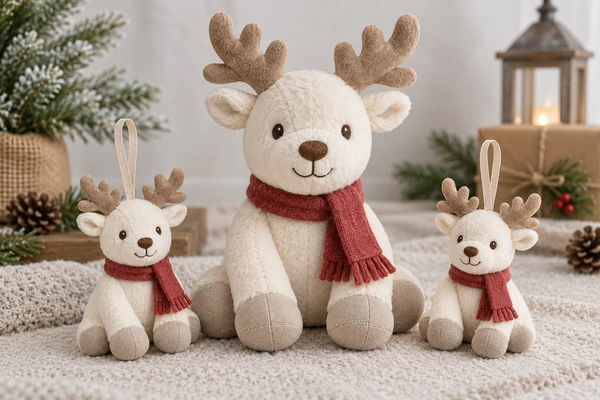
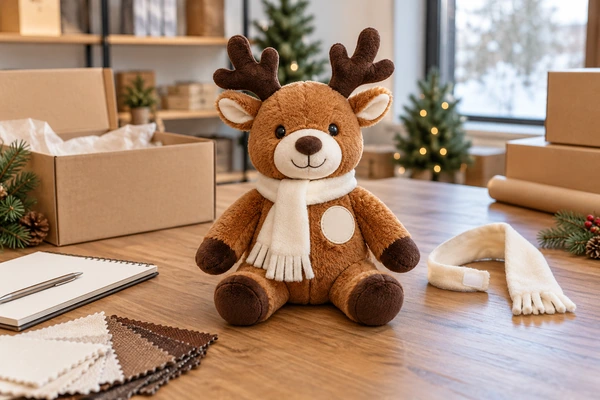
Picture an ivory reindeer collection with muted red scarves. A medium plush anchors the gift display, a smaller version suits modest purchases, and a hanging ornament extends the theme. This is an illustrative planning model for Christmas plush collections, not a recommendation to give every format the same quantity.
Map the assortment to shopping missions
Start with the reasons customers enter the seasonal section. Some need a complete gift; others want a small companion to another purchase; others are decorating. Assign the product to a mission before adding another color or size. Shopify’s assortment-planning guide provides a useful framework for range breadth and depth.
| Shopping mission | Possible format | Planning question |
|---|---|---|
| Main gift | Medium or larger plush | Does presentation justify the shelf space? |
| Small add-on | Compact plush | Is the choice easy beside other gifts? |
| Decoration | Hanging ornament | Does it hang and display as intended? |
| Coordinated purchase | Related formats | Are the differences useful and visible? |
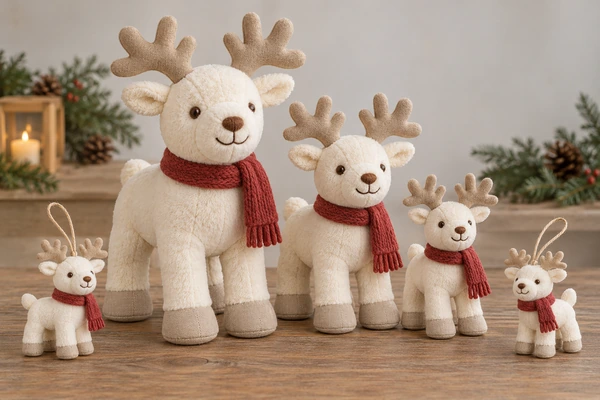
Build one recognizable visual story
Choose a limited set of recurring features such as a palette, expression and scarf detail. Let those features connect the collection while allowing each format to be constructed appropriately. Compare relevant animal plush directions without making every item a reduced copy of the largest design.
Use physical references for fabric and thread. Pantone’s sample guidance explains why screen color alone is insufficient. Discuss consistency across formats through the development process, particularly when materials differ between a plush toy and a small ornament.
Give ornaments their own review
Check the hanging loop, balance and front-facing orientation on the intended display. Inspect whether the ornament twists, leans or hides its face when suspended. Review the complete attachment and packing method, including any separate accessories supplied with it.
Classification and requirements depend on the actual product and intended use, not only its seasonal name. Use CPSC holiday-safety information as consumer-context guidance, and review toy requirements where applicable. Address small components with the relevant small-parts guidance.
Plan the display before fixing quantities
Mock up the shelf or peg section with the proposed packaging. Measure the space used by each format and check whether shoppers can distinguish the options. A large gift plush may create visual impact while occupying the space of several smaller items. Decide whether that role earns its allocation.
Review production and carton assumptions with the manufacturing team. Plan variant identification using the GS1 GTIN rules. Keep the SKU list, carton labels and retail tags aligned so a mixed delivery can be received and allocated accurately.
Allocate depth according to evidence
Document the assumptions behind the order so they can be reviewed later. Record planned selling weeks, promotional activity, store count and the intended display location. A product placed near the checkout may perform differently from the same product on a distant seasonal shelf. Keep those conditions visible when comparing results instead of attributing every difference to the character design itself.
Use previous comparable sales, price positions and display capacity to form the initial order. Separate a proven core item from a new experimental design. Shopify’s seasonal forecasting discussion is relevant to using historical patterns without assuming they repeat exactly.
Review the forecast at the format level before dividing it among designs. If the store has limited ornament space, adding more ornament characters divides the same opportunity into smaller quantities. Make the purpose of each addition explicit: a new price point, a different customer preference or a stronger visual story.
Approve the collection as customers will see it
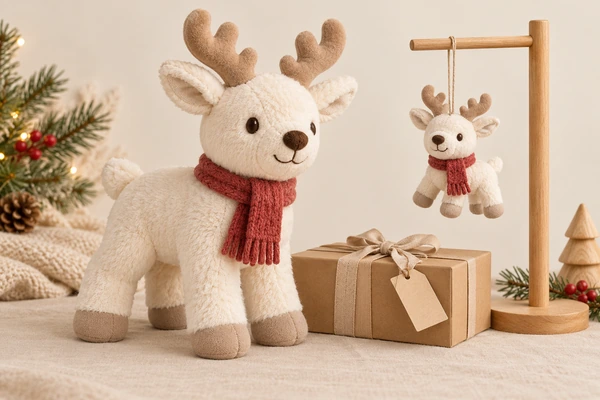
Check the full assortment together, including hangtags and gift boxes. Connect the review to the quality-control plan. Discuss transport testing through the ISTA procedure overview if the pack needs validation. Do not approve each product in isolation and discover mismatched presentation when the display is assembled.
Work backward from the first selling date, including photography, stock allocation and store preparation. Keep a realistic decision cutoff for changes. If an accessory remains unresolved, compare the impact of simplifying it with the impact of delaying the collection. Record the chosen alternative and its effect on the coordinated appearance.
Plan how the range will look as popular items sell through. A display dependent on every format remaining available can quickly become uneven. Choose practical replenishment and rearrangement rules, and identify whether late-season stock can retain its appeal beyond a dated campaign message.
Review seasonal ordering questions, then send your Christmas assortment plan with format roles, quantities and first selling date.
Prepare your seasonal buying inquiry
Copy and complete this brief; mark unresolved items to confirm.
Company / contact:
Product / size / intended use:
Market / quantity / arrival date:
Selling window:
Assortment:
Contingency:
Email This BriefWhatsApp This Brief
Review and send it yourself, or paste it into our inquiry form.

[…] a focused Christmas assortment, assess Easter basket fit, and decide the tone of Halloween designs separately. A common base […]
[…] schedule with named owners. A date without its prerequisite can hide risk. Start by confirming your Christmas assortment, including which items must launch together and which can arrive […]