
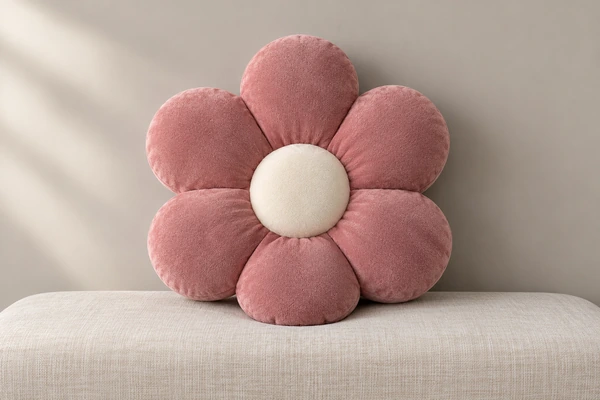
Plush pillow fabrics and fillings should be selected together. The cover determines surface feel and helps define the outline; the filling determines fullness, weight and recovery. A soft fabric cannot compensate for uneven filling, and extra filling cannot reliably correct a poorly shaped cover. Compare finished prototypes built to the same dimensions before approving a combination.
This guide helps homeware buyers turn a preference such as “soft but structured” into a usable specification for plush pillows and cushions. Start with the intended use: decorative display, an occasional lap cushion or another clearly described purpose. Do not imply sleep or therapeutic performance without appropriate evidence.
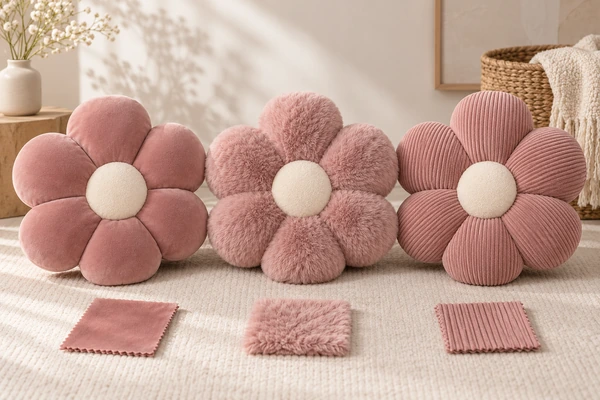
Three material combinations to put on the table
For a dusty-rose flower cushion, sample a smooth short-pile cover, a longer-pile cover and a visibly textured alternative. Keep the pattern and nominal dimensions consistent so the comparison reveals the effect of materials. Ask the supplier to identify each fabric by reference number, composition and relevant construction details.
| Surface direction | What to observe | Question for the sample review |
|---|---|---|
| Smooth short pile | Clear seams and surface decoration | Does the petal outline remain defined? |
| Longer pile | Fluffy appearance and directional shading | Does pile hide the face or embroidery? |
| Textured surface | Visible pattern and tactile interest | Does the texture distort around curves? |
Separate fiber composition from the fabric’s trade name
Terms such as “minky,” “velvet” or “super soft” are insufficient purchasing specifications on their own. Request composition, an actual swatch and the exact supplier reference. For US retail planning, the FTC textile-labeling guide covers household textiles including cushions. Review the complete product’s labeling requirements rather than copying a fabric supplier’s label.
Discuss availability through the material selection process. A beautiful swatch is less useful if its color or construction cannot be supplied for the order. Record whether the approved material is a stock option or requires separate development, and what happens if it becomes unavailable.
Specify the filling outcome, then record the input
Use a simple comparison sheet during the review. Ask each reviewer to describe softness, support and perceived fullness before seeing the quotation. This reduces the chance that a price label determines the verdict. Photograph each sample in the same pose and record its measured dimensions after the agreed conditioning period.
Also check the cushion in its intended setting. A flower that looks balanced on a flat table may slump when propped on a sofa. If a retailer needs both poses, specify both. Keep any added internal structure or revised fill distribution visible in the next sample specification, since those changes may affect weight, packing and care.
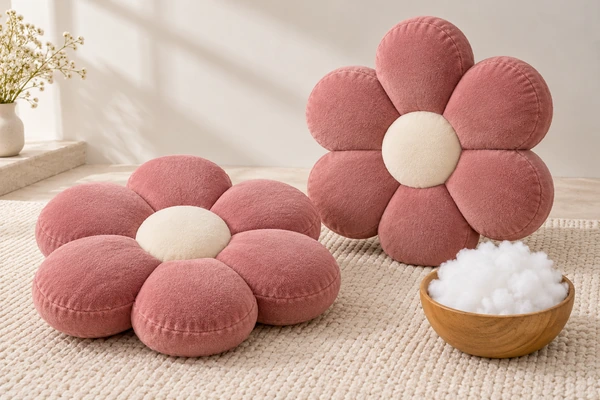
Ask for proposed filling composition, target fill weight and the method used to distribute it. Evaluate how the cushion feels at its center, edges and narrow sections. Two cushions with the same weight can feel different if their shapes or filling distribution differ.
For the flower example, lightly compress each petal and compare its recovery with the center. Note lumps, hollow sections and asymmetry using the same review method for every prototype. Discuss the filling operation with the production team. Avoid writing “premium filling” as the only acceptance criterion; it describes a sales position, not a measurable result.
Check color, seams and decoration as one system
View the finished cushion under consistent lighting and turn it to reveal directional shading. Keep an approved physical reference; Pantone’s sample guidance is useful when discussing why a screen image is insufficient. Compare embroidery and piping against the actual cover.
Inspect seam appearance while the cushion is relaxed and gently compressed. Coats’ seam guidance supports considering fabric and thread together. Put the agreed visual and dimensional criteria into the quality review, including how measurements will be taken after unpacking.
Match care instructions to the finished cushion
Ask what care testing supports the proposed instructions. Check the cover, filling, embroidery and any closure after the same treatment. ISO 3758 describes textile care symbols; choosing symbols does not establish that the product can withstand the treatment.
If a material certification is offered, verify its scope and identity. OEKO-TEX STANDARD 100 addresses testing for harmful substances. Do not describe an entire cushion as certified solely because one input has documentation. Environmental statements also need support under relevant guidance such as the FTC Green Guides.
Approve the material after the packing trial
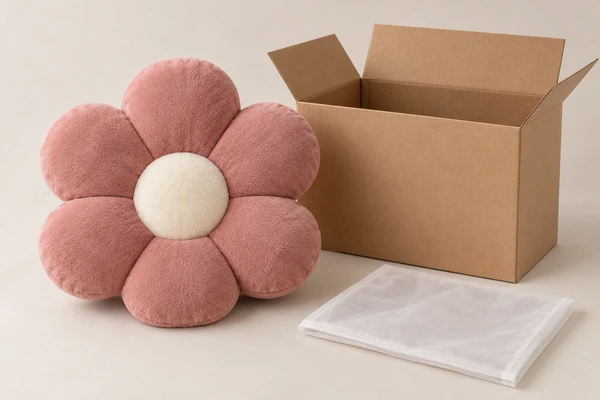
Pack a representative sample using the proposed method, then assess appearance after unpacking at agreed intervals. Record the duration and conditions of the trial. Use the ISTA procedure overview to discuss transport testing separately from a simple shape-recovery check.
Review ordering and packaging questions before freezing the specification. Keep the approved fabric, filling and packing references under one revision; ISO 10007 provides configuration-management background. Retain the supplier’s company details with the records, then request a cushion sampling comparison using your target shape, intended use and preferred feel.
Prepare your filling specifications inquiry
Copy and complete this brief; mark unresolved items to confirm.
Company / contact:
Product / size / intended use:
Market / quantity / arrival date:
Fill reference:
Construction:
Recovery check:
Email This BriefWhatsApp This Brief
Review and send it yourself, or paste it into our inquiry form.


[…] look identical under every lamp. Start with the intended room and the decisions described in our plush pillow fabric selection guide, then use this […]
[…] samples side by side. Record finished dimensions, filling weight, loft and feel separately. Our fabric and filling guide helps describe options, while the size and shape specification guide helps remove measurement […]