
Two suppliers can quote the same animal plush and offer very different levels of control. Compare wholesale stuffed animals supplier capabilities by asking for evidence against your actual product, order mix and delivery plan. A broad catalog, an attractive sample or a quality certificate alone cannot answer whether a supplier can repeat your approved result.
For a strategic sourcing team, the useful output is a short evidence matrix. It should distinguish demonstrated capability, a proposed solution and an unresolved question. Start with your intended retail assortment, then evaluate suppliers against the same brief.
Separate five capabilities that are often bundled together
| Capability | Evidence to request | What it helps establish |
|---|---|---|
| Pattern development | Comparable sample and revision explanation | Understanding of shape and construction |
| Material control | Approved swatches and substitution procedure | Repeatability of appearance and feel |
| Production planning | Project schedule with dependencies | Feasibility for your order window |
| Quality management | Inspection records with product scope | How defects are detected and corrected |
| Order coordination | SKU and packing reconciliation example | Control of quantities and destinations |
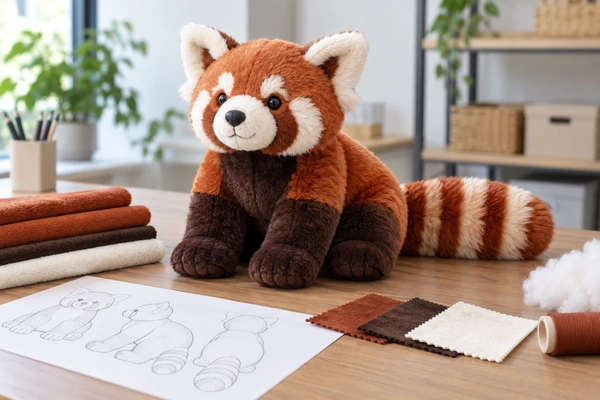
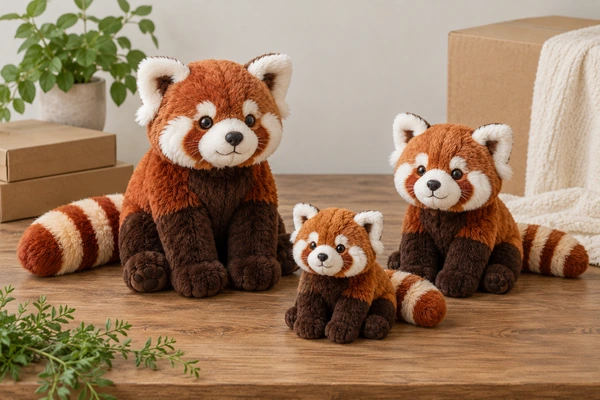
A hypothetical red panda illustrates the difference. A supplier may reproduce the cream face accurately yet struggle to keep a long striped tail consistent. Ask which operations control stripe alignment, tail position and filling distribution. Your realistic or stylized design choice changes which details deserve the closest comparison.
Match evidence to the claimed capability
Ask who develops the pattern, who cuts and sews the item, and whether any relevant operations are subcontracted. The purpose is to understand responsibility and communication, including who approves a material substitution. A named contact should be able to explain the process without promising that every activity happens under one roof.
Use ISO quality-management information to understand a management-system claim, and check the issuer and scope using ISO’s certification guidance. A management-system certificate does not certify an individual plush product. Compare the stated site, activities and validity with the project being quoted.
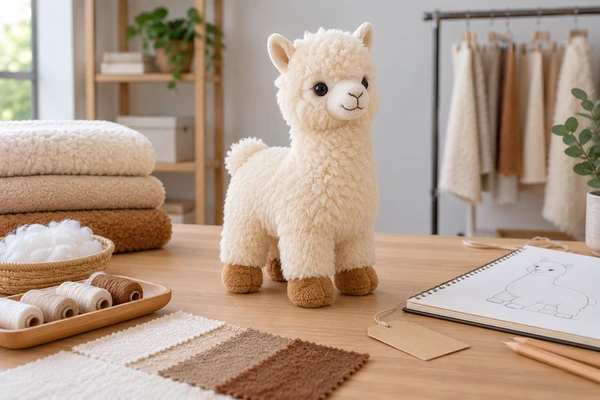
For materials, request the fabric reference, pile direction, color standard, filling type and approved alternatives. Our fabric selection guide helps frame those questions. Evidence becomes more useful when it identifies a specific material lot or sample version instead of saying only “premium quality.”
Use one controlled sample challenge
Give shortlisted suppliers the same artwork and acceptance criteria. Include one meaningful construction difficulty, such as a curved facial panel, rather than demanding a complicated free sample unrelated to the order. Record what each supplier flags before development and whether its proposed simplifications preserve the character.
Compare revisions against a numbered reference. Configuration-management guidance provides a useful framework for identifying approved versions. Keep the practical record simple: revision number, changed feature, reason, approval owner and date. The sample approval checklist can become the final gate.
Check market readiness separately from workmanship
Tell suppliers the destination markets, intended users and proposed age grading. For US toy projects, start with CPSC toy guidance; where children’s product certification applies, review CPC requirements. Confirm the relevant scope of a testing laboratory through the CPSC laboratory directory. An old report for another item is supporting context, not automatic clearance for your design.
Ask which changes trigger a fresh review. Different eyes, accessories, materials or packaging can alter the assessment. Assign the importer’s and supplier’s document responsibilities before committing to a production date.
Compare the order system, not just the sample
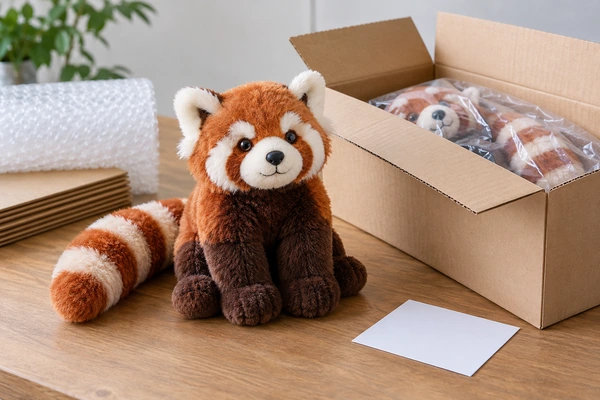
A strong sample still needs a realistic packing plan. Request finished packed dimensions, pieces per carton and identification by SKU. Use ISTA procedure information when discussing an appropriate transport evaluation; selecting a procedure requires the actual distribution route.
Align the delivery basis with ICC Incoterms guidance, including the named place and agreed version. Compare exclusions alongside the drivers of custom plush cost. A low price with undefined packing or approval scope is difficult to compare fairly.
Make a conditional selection
Before deciding, run a short communication exercise. Send one consolidated change request and ask the supplier to return its interpretation, affected costs and schedule consequences. This reveals whether questions are clarified or simply acknowledged. Review the proposed manufacturing workflow alongside the response, then identify who owns each unresolved decision.
For example, a faster sample response may be less valuable than an accurate explanation that a new tail fabric changes both cutting yield and color approval. Reward transparent constraints. Do not turn a supplier’s estimate into a guaranteed commitment until the specification, order allocation and approval timing are agreed in writing.
Rate each evidence item as verified, pending or unsuitable. Resolve any critical gap before weighting attractive secondary features. Keep one backup supplier’s current assumptions on file, and agree when capacity or material availability must be reconfirmed. Share your shortlist brief with the Shinegifts team to discuss product-specific questions.
Prepare your supplier review inquiry
Copy and complete this brief; mark unresolved items to confirm.
Company / contact:
Product / size / intended use:
Market / quantity / arrival date:
Operating scope:
Evidence:
Approval conditions:
Email This BriefWhatsApp This Brief
Review and send it yourself, or paste it into our inquiry form.